
Ask the Developer Vol. 24, The Legend of Zelda: Ocarina of Time – Chapter 4
4 November 2026

4 November 2026


Shop online
Earn My Nintendo points
Save a wishlist
Some of the images and videos shown in text were created during development.
This article has been translated from the original Japanese content.
Chapter 2: The visuals may change, but the experience does not
Chapter 4: A world bursting with life
Ohashi:
That’s right. There are a lot of new cutscenes in this game, so we composed new music to go with them. But we also wanted the new music to feel familiar to those who've played the original game. For example, in a scene set in Kokiri Forest, we incorporated motifs from the Kokiri Forest background music and arranged them to fit the scene. We thought carefully about how the music could support what each scene was trying to convey and reflect the characters’ emotions. Altogether, the game ended up with more than 150 pieces of background music.
Ohashi:
Yes. But it’s not unusual these days for a game to feature music performed by a full orchestra. The music from The Legend of Zelda: Ocarina of Time has also been arranged for orchestral concerts before, so that alone wouldn't have been enough to surprise anyone. We weren’t sure what approach to take, so we began by analysing how the background music in the original was designed. What we found was that the music in The Legend of Zelda: Ocarina of Time conveyed the scale of each scene and shifts in pacing through the composition itself, rather than changes in volume. So, for this game, just because the visuals had been enhanced, it didn’t mean we were going to give the music for the inside of a house the full-orchestra treatment. For the grand themes, we drew fully on the power of the orchestra. But for the simpler pieces, we limited the instrumentation to preserve their simplicity. We consulted with Kondo-san about how each piece should be interpreted, then arranged the music while staying true to the original design.
Fujibayashi:
In The Legend of Zelda: Breath of the Wild and The Legend of Zelda: Tears of the Kingdom, we deliberately emphasised ambient sound and aimed for music that wouldn’t always be at the forefront. The music in The Legend of Zelda: Ocarina of Time is different. It has a real power to guide players’ emotions, whether by heightening their excitement or by capturing the place or moment they’re in. Listening to it again for this game, I was reminded of just how many emotionally stirring pieces there are.
Ohashi:
That’s right. We also gave a lot of thought to how we could convey the emotion and nostalgia of the original game. In fact, some pieces combine a live full orchestra with sounds from the original Nintendo 64 version.
Ohashi:
We didn’t use the audio output from Nintendo 64 as is. Instead, we used the original Nintendo 64 sound source as a reference to faithfully recreate some of the sounds. We wanted to do something only Nintendo could as a way of bringing back memories of that time.
Fujibayashi:
Take the music inside Link's house, for example. You do a double take when the sounds you remember from back in the day enter the mix.
Fujibayashi:
The first time I heard it, I couldn’t help asking, “Are we seriously going ahead with this?” (Laughs) But in the end, I think mixing in the sounds from that era makes the game feel like more than just a modern remake. This kind of creative thinking isn’t limited to sound. Whatever their role, each developer looks for ways to create something interesting within their own area of expertise. I think that's always been at the heart of Nintendo's development spirit.
Ohashi:
In this game, sound gives everything you see on screen a greater sense of presence. We layered in subtle sounds that might normally go unnoticed, such as leaves rustling in the wind, water running over rocks, and the calls of insects and birds, to make the world feel more alive.
Aonuma:
As the visuals have become more detailed, we’ve also added all kinds of ambient sounds that you’d expect to hear if you were really there. The result is a world that's bursting with life.
Ng:
I think Kokiri Forest is one place where you can particularly experience that. Near the waterfall, you can hear the water crashing into the pool below, but the sound fades as you move away. The sound effects and ambient sounds change with what’s happening and where you are.
Ohashi:
This game supports 5.1-channel surround sound, making the sounds of the game world feel more three-dimensional. Even without a home theatre setup, you can experience the game’s rich ambient sound in Kokiri Forest and many other locations by connecting headphones to your Nintendo Switch 2 console. I hope you’ll give it a try.
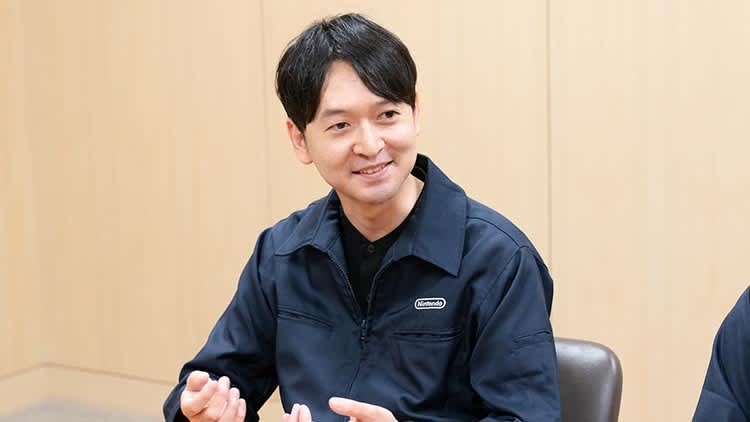
Ohashi:
You get the sense that Link is actually right there playing the ocarina. Just as with the ambient sound, we can now make the sounds of instruments more true to life. The way the ocarina resonates changes depending on where you play it, so it’s also fun to find a comfortable spot and play to your heart's content. We also recorded a real ocarina, so I think you can even sense the breathing that goes into the performance.
Ng:
It was about a year ago, I think. Aonuma-san came over to my desk and said, “Nintendo Switch 2 has a built-in microphone... We can use it for voice recognition!” I was like, “Well, that came out of nowhere”. (Laughs)
Aonuma:
Well, I thought it would be nice if you could hum a song you’d learned in the game, have the game recognise it, and then hear Link play it on the ocarina. I also thought there might be players who can play a real ocarina, so wouldn’t it be fun if the game recognises their playing too? I suddenly threw the idea out there, asking the team the impossible.
Fujibayashi:
The development team had no end of trouble getting the system to recognise the sounds correctly and making all the necessary adjustments, though. (Laughs) But I think this also gets to the heart of how Nintendo makes games. We inject fun into our games from somewhat unconventional angles. Using the microphone to play the ocarina feels like a very Nintendo idea to me.
Aonuma:
It’s not even like voice recognition makes it any easier to progress through the game. (Laughs) But being able to interact with the world in such an intuitive way makes it feel much closer to you. I hope players enjoy that kind of interaction.
Ng:
We felt that if we were going to improve the graphics so dramatically, the cutscenes needed to be fully voiced to match. But at the same time, we knew we shouldn't mess with established perceptions of how certain characters sound based on the original. Navi’s “Listen!” is one example. Even someone who's never played The Legend of Zelda: Ocarina of Time may have heard it before. We absolutely didn’t want to change anything as iconic as that. So when auditioning for each character, our top priority was selecting voices that recreated the sound and feel of the original game. We conducted blind auditions.
Aonuma:
We deliberately hid the voice actors’ names during the Japanese auditions to force ourselves to decide based solely on which voices most closely resembled those of the original. And as fate would have it, one of the actors we selected had actually voiced the same character in the Nintendo 64 version. None of us saw that coming.
Ng:
Absolutely. The Legend of Zelda: Ocarina of Time has plenty of unique controls and items, so we've made sure to introduce them carefully to players. As players control Link, we introduce actions one at a time, as they're needed, and give players clear feedback when they succeed. Through this gradual process, we’ve made the game approachable even for people who are completely new to The Legend of Zelda series.
Fujibayashi:
Games from the Nintendo 64 era were comparatively quite difficult, and players often relied on strategy guides. For this game, though, we wanted players to be able to work out what to do next within the game itself. Striking the right balance with hints is difficult. But The Legend of Zelda series has continued to find new ways to help players keep going without giving up halfway, so we stayed mindful of that in this game. This game also supports ZELDA NOTES. It includes features carried over from ZELDA NOTES for The Legend of Zelda: Breath of the Wild – Nintendo Switch 2 Edition and The Legend of Zelda: Tears of the Kingdom – Nintendo Switch 2 Edition. It also offers elements unique to The Legend of Zelda: Ocarina of Time, such as the ocarina-playing mode, along with additional features linked to gameplay for those who want to explore further. We hope these features will help both newcomers and fans of the original continue playing all the way to the end.
Aonuma:
When we decided to fully remake The Legend of Zelda: Ocarina of Time for the 40th anniversary of the series, I knew that I didn’t want it to be simply a polished-up version of an old game. As I saw how the game was coming together, I realised that the development team had re-examined the original from their own perspectives. The result surprised me in the best possible way. It isn’t a question of whether the original or this game is better. The world simply feels so much richer. With the original, we wanted to show everyone, “This is what The Legend of Zelda can be in 3D!” We felt we had done everything we possibly could at the time. This game adds further richness to what we created, bringing the world to life in a way that makes it feel closer and more tangible. I think that sense of richness is the result of everyone thinking long and hard about their own memories and the memories players have of the original, and wrestling with how best to honour them.
Ohashi:
I hope first-time players will immerse themselves in the world of The Legend of Zelda through this game. For those who cherished the original, we've put a lot of thought into the sound, so I hope they’ll enjoy this game while keeping those memories alive. I invite players to stop and appreciate the sounds around them as they set out on their adventure.
Taguchi:
Due to the processing and graphical limitations of the time, I think players of the original filled in the gaps with their own imagination, much as you might do when reading a picture book. In that sense, each player created their own version of The Legend of Zelda: Ocarina of Time in their mind. For this game, we tried to forge as many connections to those individual memories as possible. I hope fans of the original find themselves reminiscing as they play. I also hope that for complete newcomers to the Legend of Zelda series, this new version of the game, rebuilt for a modern era, will serve as their entry point into the series.
Shida:
We gave this game everything we had while taking great care not to lose the mysterious charm and overall feel of The Legend of Zelda: Ocarina of Time. I hope this game becomes a cherished memory for everyone who plays it, and that its story remains in their hearts 20 or even 30 years from now. And if it inspires even one person to think, “I want to make a game like this too”, I couldn’t ask for anything more as a developer.
Ng:
I hope people who played the original all those years ago will enjoy seeing the game brought back to life, taking a trip down memory lane while simultaneously discovering it anew. I hope first-time players will discover its charm and finish the game wanting to tell someone about it.
Fujibayashi:
We wanted fans of the original to relive old memories through this game, while offering series' newcomers a completely fresh experience to sink their teeth into. I hope both kinds of players give it a try. Some of those who played The Legend of Zelda: Ocarina of Time 28 years ago may have families of their own now. I invite their adult selves to enjoy this remake together with the young ones in their families, while looking back on their time with the original.
Aonuma:
I can confidently recommend this game as a new way to experience The Legend of Zelda: Ocarina of Time, one that the entire team arrived at after thinking long and hard about what it should be. I believe it will feel new not only to first-time players, but also to fans of the original, and I’d love for everyone to discover that for themselves.