
Ask the Developer Vol. 24, The Legend of Zelda: Ocarina of Time – Chapter 1
4 November 2026

4 November 2026

Shop online
Earn My Nintendo points
Save a wishlist
Some of the images and videos shown in text were created during development.
This article has been translated from the original Japanese content.
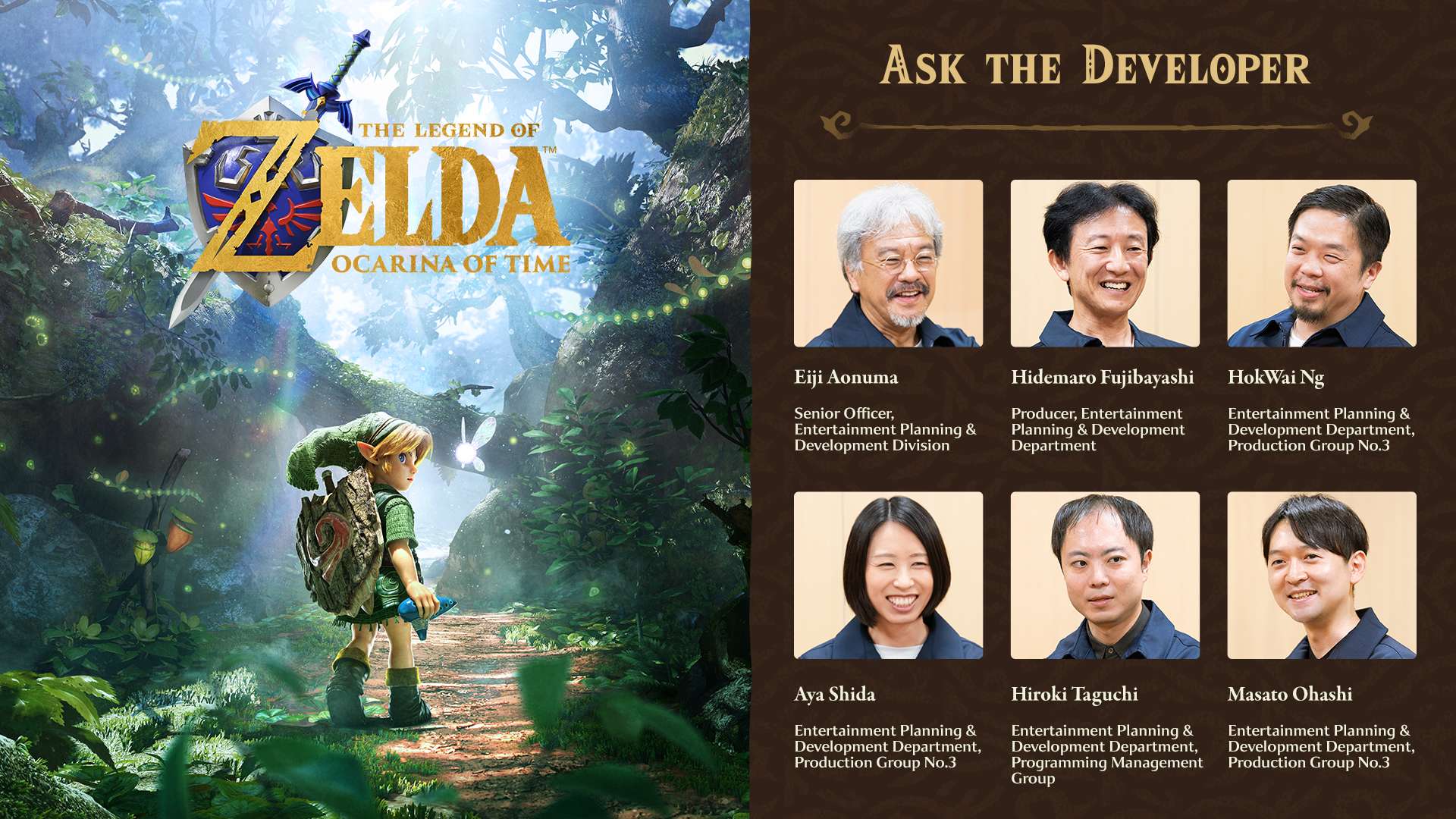
In this 24th volume of Ask the Developer, an interview series in which developers convey in their own words Nintendo's thoughts about creating products and the unusual details they hone in on, we're talking to the developers behind The Legend of Zelda: Ocarina of Time, a Nintendo Switch 2 exclusive game that launches on Thursday, 5th November.
Chapter 1: A turning point for the series
Chapter 2: The visuals may change, but the experience does not
Aonuma:
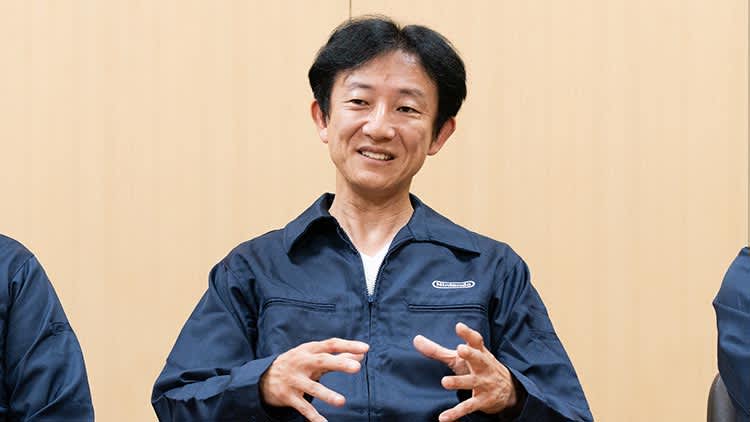
Hello, I’m Eiji Aonuma, the producer of The Legend of Zelda series. I’ve been involved in the development of every title in the series since The Legend of Zelda: Ocarina of Time for Nintendo 64. For the game we're introducing today, I served as a producer.
Fujibayashi:
Hello, I’m Hidemaro Fujibayashi. I first joined the series with The Legend of Zelda: Oracle of Seasons and Oracle of Ages (1). I later served as director on The Legend of Zelda: Skyward Sword (2), The Legend of Zelda: Breath of the Wild (3), and The Legend of Zelda: Tears of the Kingdom (4). For this game, I also served as a producer alongside Aonuma-san.
(1) Released for Game Boy Color in October 2001 in Europe. The Legend of Zelda: Oracle of Seasons follows Link on an adventure in which he can manipulate the seasons with the Rod of Seasons, while The Legend of Zelda: Oracle of Ages sees him solving puzzles and travelling through time using the Harp of Ages. By entering passwords obtained in each game, players can connect the two adventures and travel between their worlds.
(2) The Legend of Zelda: Skyward Sword. Released in November 2011 for Wii. This game featured an intuitive control system which utilised the technology of the Wii Remote Plus and Wii MotionPlus accessories. A remaster of the game, The Legend of Zelda: Skyward Sword HD, was released in July 2021 for Nintendo Switch.
(3) The Legend of Zelda: Breath of the Wild. Released for Nintendo Switch and Wii U in March 2017. Awakening from a 100-year slumber, the protagonist, Link, must explore and survive the vast and dangerous land of Hyrule to regain his memories.
(4) The Legend of Zelda: Tears of the Kingdom, a Nintendo Switch game released in May 2023. It takes place after the story of The Legend of Zelda: Breath of the Wild and is set in the same world. The title spans a vast environment across the land and skies of Hyrule. Players can pick up, move, and fuse together many objects to create things like vehicles and weapons.
Aonuma:
Yes, of course. At the time, we'd just released our latest hardware, Nintendo 64, and it was a period when 3D technology had greatly expanded the possibilities for Nintendo games. After the release of Super Mario 64, which took full advantage of that technology, discussions emerged amongst the development staff that the next game should be a The Legend of Zelda game, which ultimately became The Legend of Zelda: Ocarina of Time. It’s a story about Link, the protagonist, embarking on an adventure alongside the fairy Navi, guided by Princess Zelda. Travelling between his childhood and adulthood, he explores Hyrule in his quest to defeat the antagonist, Ganondorf. As a dynamic 3D game with a rich narrative, it was one of the first large-scale projects Nintendo undertook. This was the first game in the series to introduce Z-targeting (5), a control system born from the transition to 3D that has since become a standard feature of The Legend of Zelda series.
(5) By pressing the Z Button on the Nintendo 64 controller, the camera moves behind Link, enabling Link to move and battle while locking on to enemies or certain targets. Locking on to enemies during battle had the advantage of letting you fight without needing to pay attention to the camera, and only using simple controls.
Fujibayashi:
At the time, I was developing games at a different company. Of course, I was aware of the game’s release, so I picked it up on launch day and started playing. I remember first seeing the package, with its predominantly black design, and thinking how sophisticated it looked.
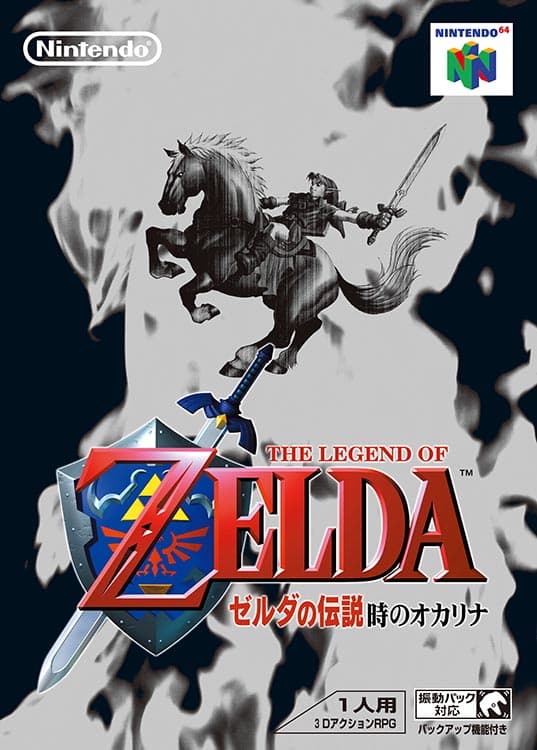
Japanese box art for The Legend of Zelda: Ocarina of Time on Nintendo 64.
Fujibayashi:
Also, back then, one of the biggest challenges in developing 3D games was determining how to orient the camera within a three-dimensional space. When I played the game and experienced Z-targeting for myself, I remember being impressed and thinking, “So this is how they overcame that challenge”.
Aonuma:
The Nintendo 64 controller was the first Nintendo controller to feature a Control Stick, but because it only had one stick, you couldn’t freely control the camera the way you can with modern controllers. So, as we discussed how to make sword combat work in that 3D environment, Miyamoto-san (6), Koizumi-san (7), and others came up with a gameplay system that let players easily target enemies by locking the camera onto them with the Z Button. I remember fine-tuning the camera movement right until the very last minute.
(6) Shigeru Miyamoto. Representative Director and Executive Fellow. Super Mario, Donkey Kong, The Legend of Zelda and Pikmin series creator.
(7) Yoshiaki Koizumi. Senior Executive Officer, Deputy General Manager of Planning and Development Division. As well as being involved in the development of Super Mario Galaxy, he is the general producer of Nintendo Switch.
Fujibayashi:
Although The Legend of Zelda: Ocarina of Time for Nintendo 64 was released in 1998, the Z-targeting system has remained largely unchanged in subsequent 3D The Legend of Zelda games. It's stood the test of time and is still effective today.
Aonuma:
I joined the development of the original The Legend of Zelda: Ocarina of Time partway through the project, where I mainly worked on dungeon and enemy design. Every day was a battle with one challenge after another, and I remember all of us working in a constant state of excitement and chaos. (Laughs) Back then, we had a multi-director structure, and roles weren’t as clearly defined as they are today. Whenever a new task came up, someone would step forward and take it on.
Fujibayashi:
It’s hard to imagine in today’s game development environment. These days, we start by building the tools and systems needed to make the process efficient, right?
Aonuma:
Yes, exactly. Back then, we had to make every minute count. That reminds me, when I finally finished the last boss battle just before the deadline, I asked Kondo-san (8) to compose background music for it. What came back was a rather bright and upbeat piece. I thought to myself, “Um…really?” (Laughs) I was really nervous about bringing it up, but when I went up to Kondo-san, saying, “I’m so sorry. It's a gorgeous piece of music and all...it just doesn’t feel right somehow”, he simply responded, “Alright, I’ll change it”. The very next day, he came back with the battle theme players know today. He came up with the new piece so quickly that we sometimes joke that Kondo-san must’ve had two versions prepared from the very beginning. (Laughs) So just like that, we experienced highs and lows every day over all manner of things, feeling our way forward as we built the game piece by piece.
(8) Koji Kondo. Sound Producer in the Entertainment Planning & Development Division. Composed music for titles such as Super Mario Bros. and The Legend of Zelda.
Fujibayashi:
Looking back, that must’ve been a really valuable experience.
Aonuma:
Yes, it was. When I watched the ending after we'd finally completed development, a flood of emotions came over me, and it brought me to tears. Since 3D games were still uncommon at the time, I remember waiting for the release with a mix of excitement and anxiety, wondering whether players would enjoy a game we'd essentially figured out as we went along. In the end, the game was embraced by many players, and even today, there are many people who consider The Legend of Zelda: Ocarina of Time their favourite game, and I’m truly grateful for that.
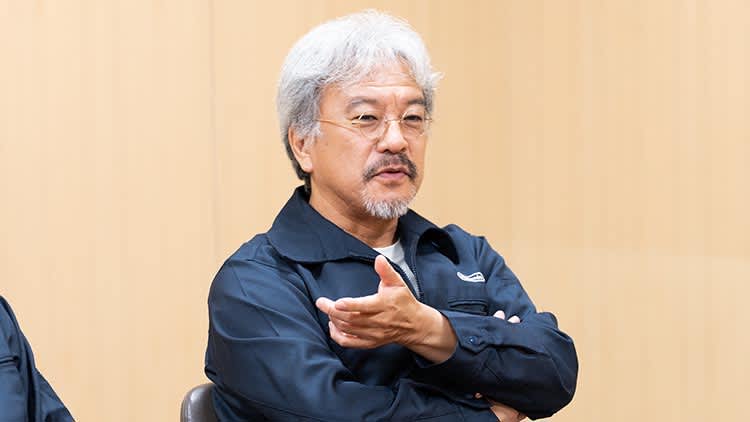
Aonuma:
I’ve worked on many different games over the years, and every one of them is special to me. However, when it comes to developing The Legend of Zelda games, The Legend of Zelda: Ocarina of Time is where it all began for me. Since then, whenever I think about The Legend of Zelda games, I often find myself returning to The Legend of Zelda: Ocarina of Time and reflecting on the things we were thinking about during its development. That’s how memorable the title was for me. After all, it was also the first The Legend of Zelda game I worked on.
Fujibayashi:
Even within the series, I think The Legend of Zelda: Ocarina of Time was a real turning point.
Fujibayashi:
Since the very first The Legend of Zelda game, the series’ gameplay has been built around the core concepts of exploration and discovery. You’d spot something over yonder and wonder what might be waiting for you there, then head off to investigate. Then what you discovered there would lead to the solution to the next puzzle. This has been carried through all the way to modern The Legend of Zelda games. The Legend of Zelda: Ocarina of Time, as the first 3D title in the series, demonstrated that this experience could remain the core of the series’ appeal. Even with The Legend of Zelda: Breath of the Wild, we consciously returned to the core gameplay principles of the first game in the series as we developed an experience centred on exploration and discovery across a vast world.
Aonuma:
When adventuring in a vast world, what truly matters are the encounters you have with people and enemies along the way. This is something we’ve cherished since the very first The Legend of Zelda game. Who are the people that inhabit this world? What kind of place is it, and what encounters await me along the way? I believe it was with The Legend of Zelda: Ocarina of Time that we began consciously pursuing those ideas to further refine the game.
Aonuma:
This year marks the 40th anniversary of the very first The Legend of Zelda game. With that in mind, I was thinking about what I should create as the producer of the series. Many of the team members who work alongside me on The Legend of Zelda games today have only experienced developing the more recent titles. That led me to wonder, “Do they truly understand just how significant The Legend of Zelda: Ocarina of Time was to the series as a whole?” Of course, there are team members who vaguely know the game, and those who played it in their childhood days. But I started to wonder how they'd interpret The Legend of Zelda: Ocarina of Time as they go about developing future The Legend of Zelda games. By learning the game structure and development style behind the original The Legend of Zelda: Ocarina of Time, and by actually rebuilding it as a full remake, it may trigger new insights that they can carry forward into future development. If we could achieve that, I thought it would be incredibly valuable. That’s what led us to the conclusion that now is the right time to revisit The Legend of Zelda: Ocarina of Time once again.
Aonuma:
Of course, that wasn’t the only reason behind this project. In The Legend of Zelda: Ocarina of Time, part of the fun comes from progressing through a carefully paced adventure and story, gradually building up the player’s growth and their understanding of the narrative along the way. We wanted players who had grown accustomed to The Legend of Zelda games like Breath of the Wild, where they can freely choose their own path from the start, to experience that kind of gameplay as well.
Aonuma:
If the producers say, “This is how it should be”, the team would naturally feel obligated to do it that way. So I basically let the developers make whatever changes they genuinely felt were necessary. I wanted the team to make The Legend of Zelda: Ocarina of Time their own, and to follow through on their own ideas about what the game should be. That said, I did deliver my fair share of lectures along the way. (Laughs) I took a step back to observe how the younger members of the development team would reimagine The Legend of Zelda: Ocarina of Time using the insights and answers they had arrived at on their own.
Fujibayashi:
From my side, I told the development team that it was important to clearly define early on what to change and what to leave unchanged. For example, given that the controller layout and available features are different, should we aim to recreate the same feel as the original game, or should we change it? For people like us, who know both the original The Legend of Zelda: Ocarina of Time and the recent 3D The Legend of Zelda games, there's no shortage of things we’d like to say when it comes to designing a game. (Laughs) That’s why I took a step back and supported the team from a broader perspective by helping them clarify the things they needed to be mindful of when designing the game.
Aonuma:
In The Legend of Zelda: Breath of the Wild, there are many warp points that enable players to move quickly around the game’s vast world. In the original The Legend of Zelda: Ocarina of Time, you could get around a bit faster by spamming forward roll, so I think a lot of players spent their time doggedly rolling across Hyrule Field whenever they needed to be somewhere in a hurry. (Laughs)
Footage from Nintendo 64 – Nintendo Classics.
Aonuma:
I thought we needed to address this in this new version. So I asked the team to add warp points that didn’t exist in the original game, giving players access to shortcuts. But when we actually tried playing the game with those warp points, we realised that we were missing out on the moments of discovery that came from stopping along the way and wondering, “Wait, what’s this?” Through this development process, we were reminded once again just how important those moments are to the very structure of The Legend of Zelda: Ocarina of Time. So even though I was the one who proposed adding warp points, they just weren't working for me in the end, so I got the team to take them all back out again. (Laughs)
Fujibayashi:
Of course, deciding to keep those elements unchanged brought its own set of challenges in figuring out how to present them with modern hardware. I think those were the areas where this development team’s own interpretation really came through.
Aonuma:
Looking at what they ultimately created, I’m impressed by how rich an experience they were able to craft from a game that first came out 28 years ago. At the beginning of development, I remember thinking, “They could be making more changes”. But as the project went on, it really came across just how deeply this development team cared about the original game, far more than we had imagined.