The making of the music of Kirby Air Riders – Chapter 2
23 March 2026
Chapter 2: The song that was approved in just one take!
How exactly were the song commissions handled?
Sakurai:
For Air Ride mode courses, we needed songs that matched each course's unique characteristics, and that really had me torn. I wasn't sure whether to give them examples of music sampled from existing songs. I discuss this more on my own channel (8). We don't want a song that ends up sounding like a copycat of the sample, or for the director or musicians to be overly influenced by that song.
(8) The episode 'Using Other Songs for Audio Reference [Audio]' on the YouTube channel 'Masahiro Sakurai on Creating Games'.
If the director gets stuck thinking, "It has to be this song!", they might turn down everything else, and it seemed quite rude to tell a musician, "Hey, can you make it sound like this?" as well. On the other hand, a sample can serve as something that provides us a very clear direction.
That's why, right from the start, I asked them if they needed any sample music, and they both said yes, so I gathered various songs and sent a number of samples for each course. Then after showing them the full course outlines and concept videos, I told them to look for the commonalities in the samples and to create something similar.
So you'd think that would result in everything coming up just as I'd imagined, right? But actually, it can turn into something quite different…
Sakai:
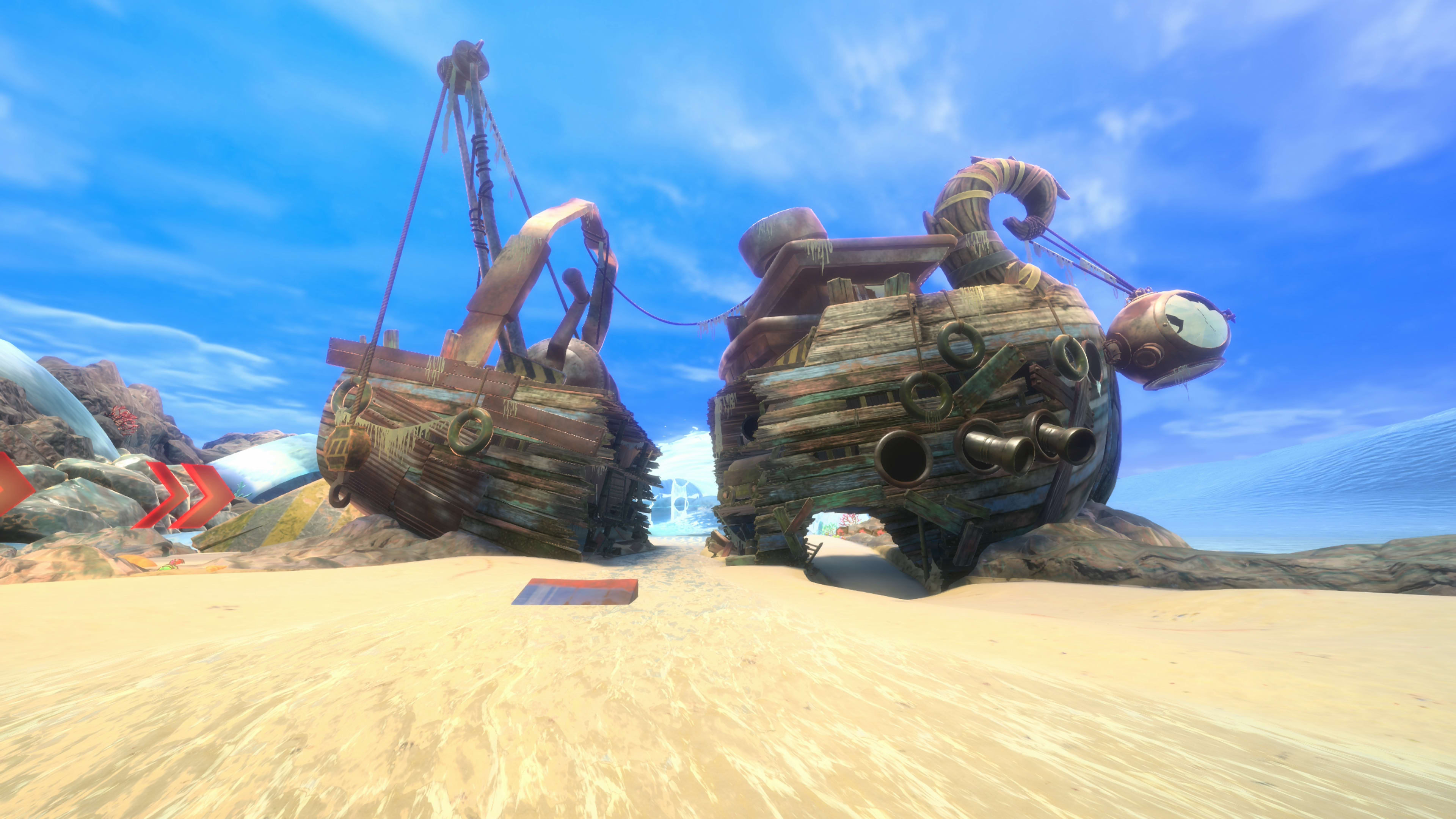
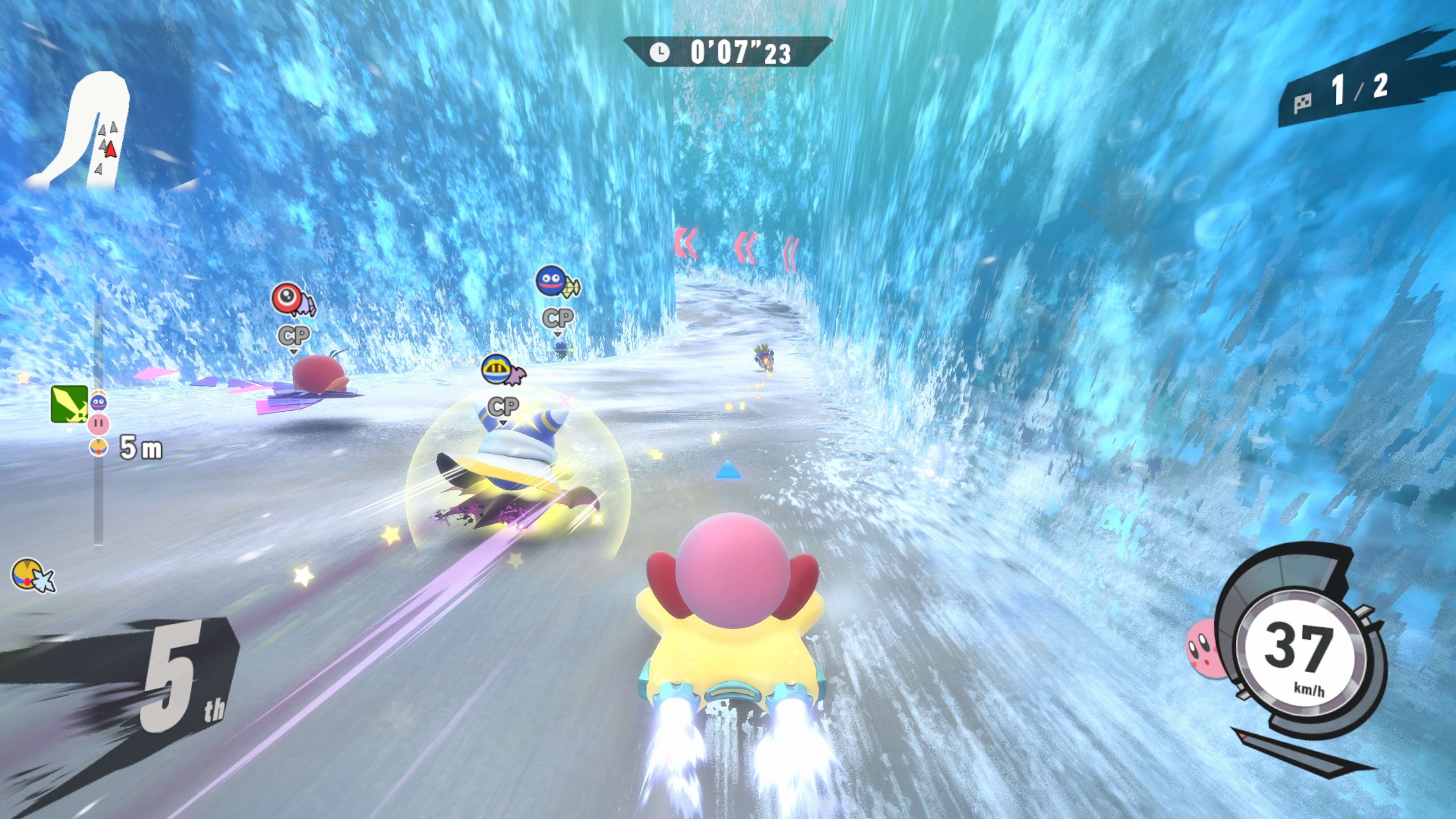
Oh no. I don't want this to be about Waveflow Waters…
Sakurai:
Yes, it's the story of Waveflow Waters. (Laughs)
Sakurai:
I know I said "please don't make it Latin or tropical sounding", but what did I receive? Latin-sounding music.
All:
(Laughs)
Sakurai:
I even sent you a sample with a hard rock tempo, but the track you sent back was cheerful and completely different. You really had me in a pickle. That said, I did evaluate it, thinking, "Would this really not work?" I thought about whether something cheery could fit in, since it is the Kirby world after all, but in the end it just wasn't the one.
Sakai:
To tell you the truth, I made the Waveflow Waters song without listening to any of the samples. I fell right into the trap.
Which parts of a sample song do you usually refer to?
Iwadare:
We refer to the tempo and atmosphere.
Sakai:
That's right. And the instruments, too.
Iwadare:
We only really pay attention to which instruments are being used. We can't copy the melody, so instead we intentionally create something different.
Sakai:
And as much as possible, I only listen to the song once.
Iwadare:
Yes, I only listen to them once as well. You have to put them out of your head while you're working.
Sakai:
I see. It certainly is a sensitive issue.
How did you decide who is in charge of which songs?
Sakai:
There were eight courses at first, and Sakurai-san asked us what we would like to do about it. I asked Iwadare if I could choose, and I went with Mount Amberfalls, Waveflow Waters, Cavernous Corners, and Floria Fields.
Iwadare:
Because I was fine with anything. (Laughs) I took the remaining Airtopia Ruins, Crystalline Fissure, Steamgust Forge, and Cyberion Highway.
Sakai:
The staff commented that I had chosen the nature/acoustic styled ones, and Iwadare-san had chosen the electro/sequencer styled ones. Although, the song for Steamgust Forge, which Iwadare handled, may have originally been imagined as something electro, but in the end it became something more orchestral instead.
Sakurai:
It's the same as when we make a Super Smash Bros. game, generally we have people work on the things they want to work on.
Sakai:
I chose those four courses because I figured they would feel the most like the previous Kirby Air Ride.
Sakurai:
Their overall theme was quite nature-based indeed. Well, aside from Waveflow Waters, of course. (Laughs)
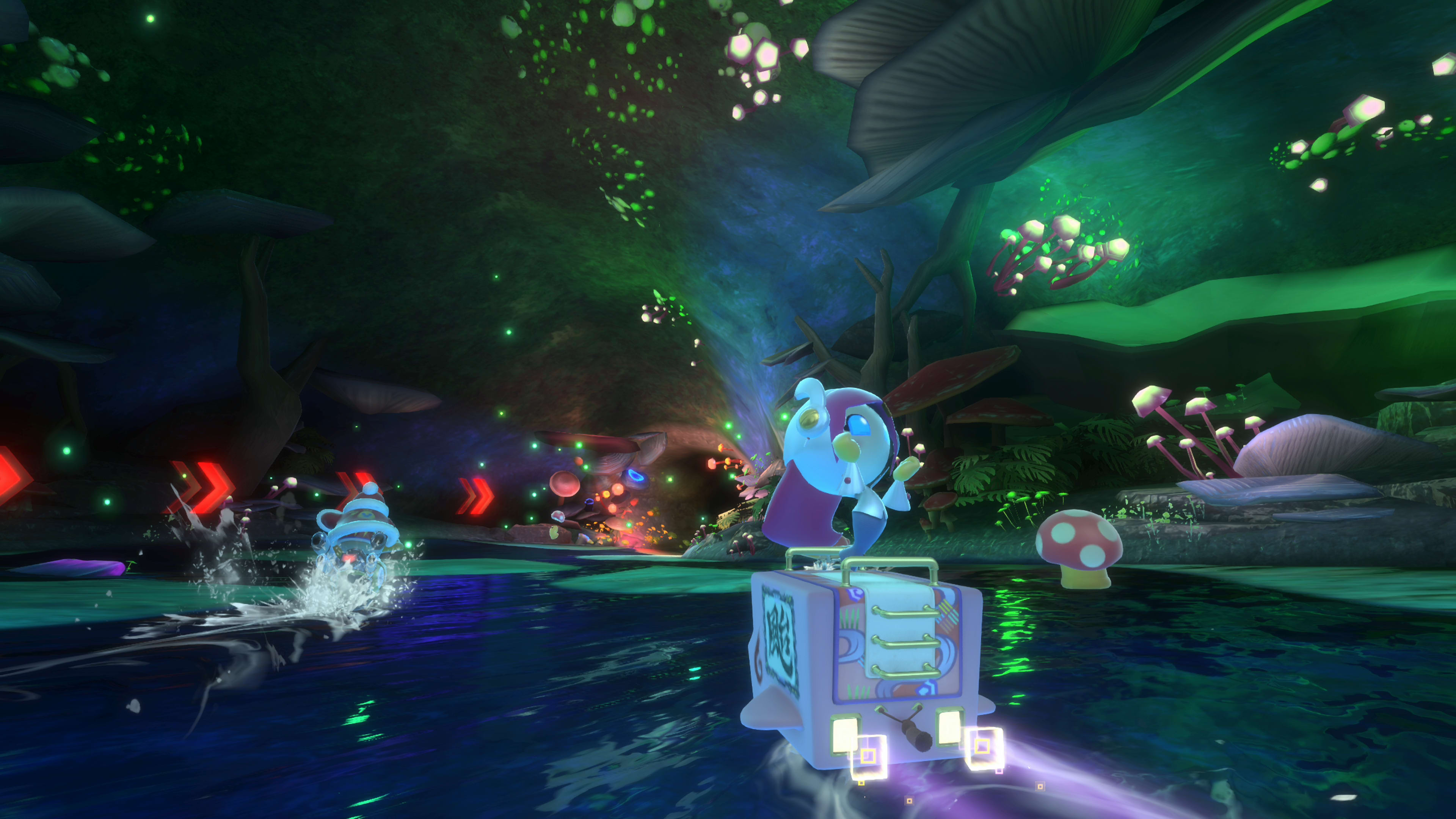
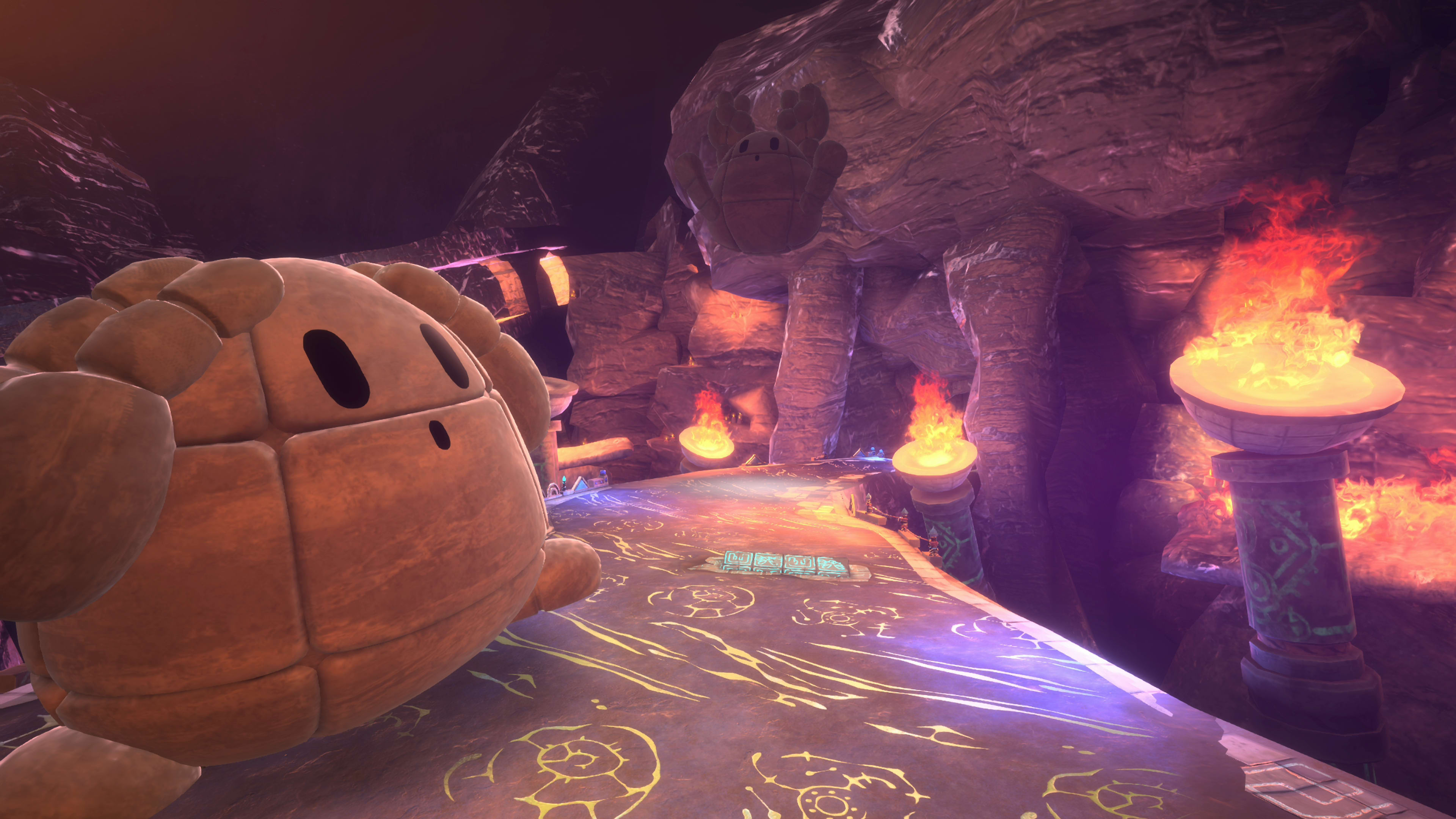
Next up, for Cavernous Corners, we talked about going with tribal music when I first requested it, and I sent samples with things like primitive drum loops. I had envisioned a wild, tribal-like atmosphere, but the song Sakai-san created was quite refined.
That part was fine so we left it in, and for the second half we used a flute as a symbol of tribal instrumentation. When we recorded the flute, we had the musician improvise three takes, and then we chose the least polished take with the strongest sense of improvisation.
Sakai:
Personally, I felt like one of the other takes was the better choice, but Sakurai-san chose a completely different one instead. (Laughs)
Sakurai:
The one Sakai-san chose was more appropriate musically, and I do understand that it fits the section really well. That does have its own merit, but some of the characters who appear in this course are inspired by indigenous tribespeople, so I really wanted the music to sound more spontaneous and less modern.
Iwadare:
The flute was of course improvised, and apparently the instrument itself was handmade by the performer. They planted the bamboo, waited for it to grow big enough, cut it and then rolled it for a good long while until the bamboo was fully prepared.
Sakurai:
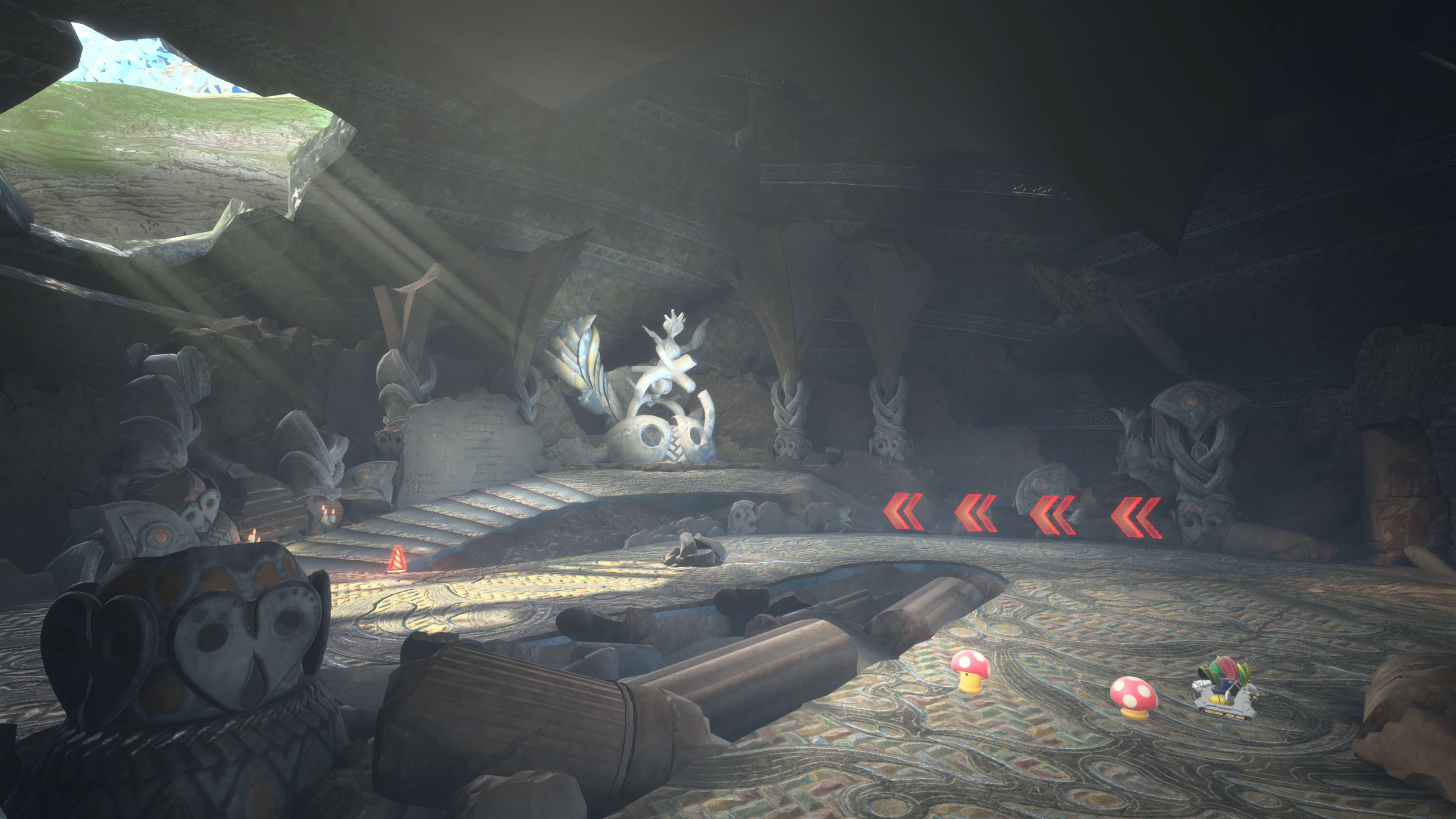
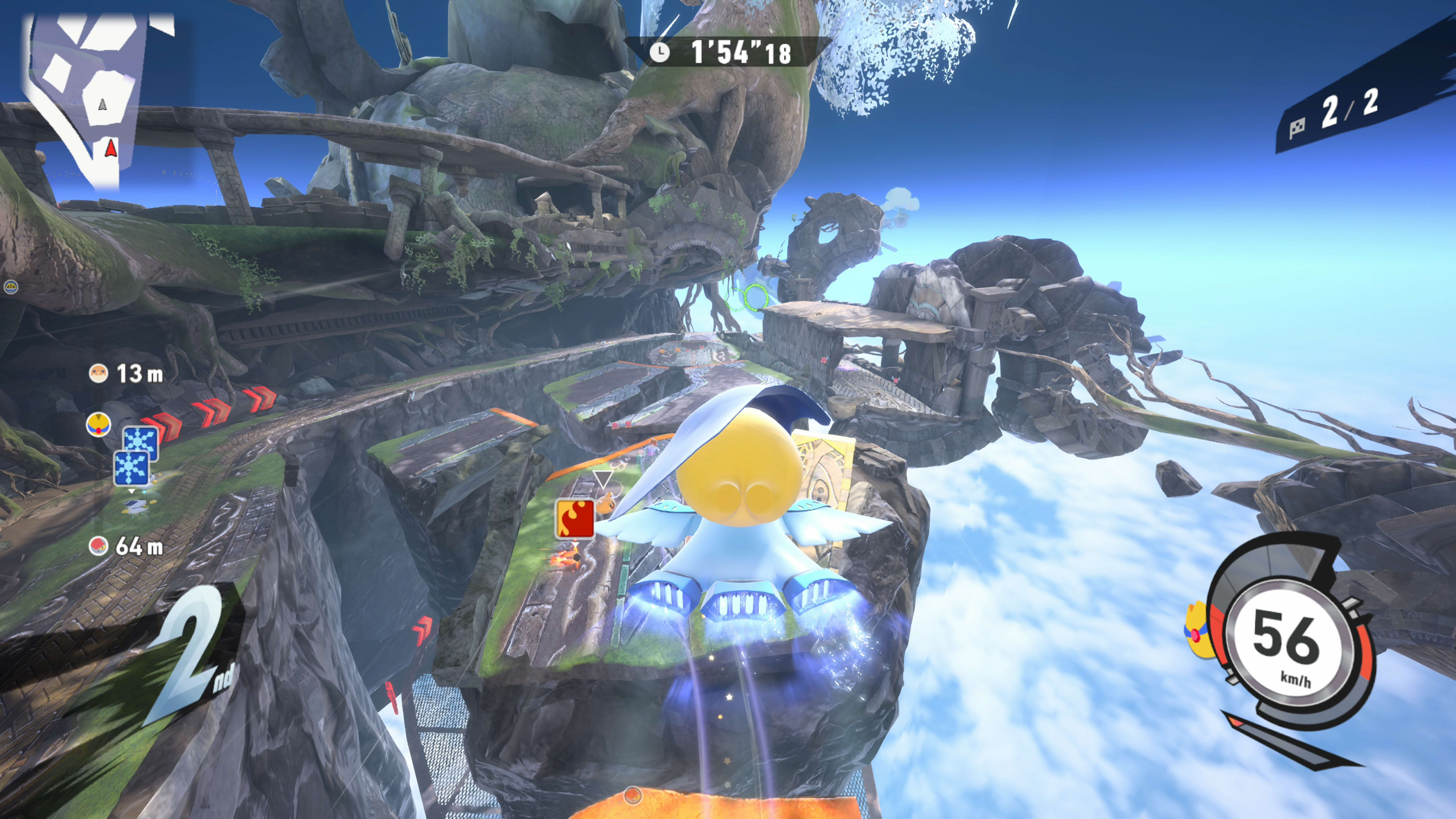
Continuing on to Airtopia Ruins. You prepared three candidates for this one, didn't you? All of them were really great songs, but the ones we didn't use were rather light-hearted and didn't quite fit the feel of the course.
The background story for the Airtopia Ruins is that there was once a king who lived in the sky and was brought to ruin through his hubris. It isn't a tourist attraction, so light-heartedness doesn't quite mesh with it. I wanted a Middle Ages orchestral style for the base that better depicted a fallen kingdom. That's why the final version of Airtopia Ruins feels more sad and empty than anything.
Sakurai:
I do feel really bad about each of the rejected takes, but course development is a massive project where dozens of staff members have to coordinate with each other on the smallest detail in every course, from concept art to game models, layouts, appropriate course lengths, features – all over the course of one to two years. Compared to that, the music is something that's easier to redo.
Iwadare:
And it can be fixed with just the one person.
Sakurai:
By having something solid prepared for the music team to review before making the commission, the graphics and audio teams can work in tandem, allowing us to create a truly satisfying gaming experience. That's why, every time a track comes in, I ask myself, "Is this really good enough?" and then reject it reluctantly, if I really have to.
Was there anything else Sakurai-san was particular about during the music creation process?
Sakai:
I have notes in my notepad about Sakurai-san telling us at the start that a song length of 1 minute and 15 seconds would be optimal for the courses.
Sakurai:
I started out thinking that a single lap should be just a little shorter than in the previous game, but in reality, we got so carried with making the courses that they actually wound up longer instead. (Laughs) On the plus side, the courses became more varied and interesting.
Sakurai-san, you already had quite the clear vision of what you wanted for the songs by the time you commissioned them, didn't you?
Sakurai:
To be clear, it's not that we had to absolutely adhere to that vision. What's most important is that the songs and courses come together in a way that feels good to the players.
Iwadare:
Sakurai-san, it's like you thought you've got the whole thing sorted, until it wasn't, right? (Laughs)
Sakai:
Yes, exactly. Because even if we sent over something that didn't quite fit, he would still give it some serious thought.
Sometimes I'd even knowingly propose going down a different direction entirely.
Sakurai:
Indeed, Iwadare-san was quite a handful, you could say. As I mentioned earlier, he submitted three music tracks for Airtopia Ruins, and then another three tracks for the main theme as well.
Are there any specific songs that differed from the initial concept, but left you thinking "Oh, this is pretty good"?
Sakurai:
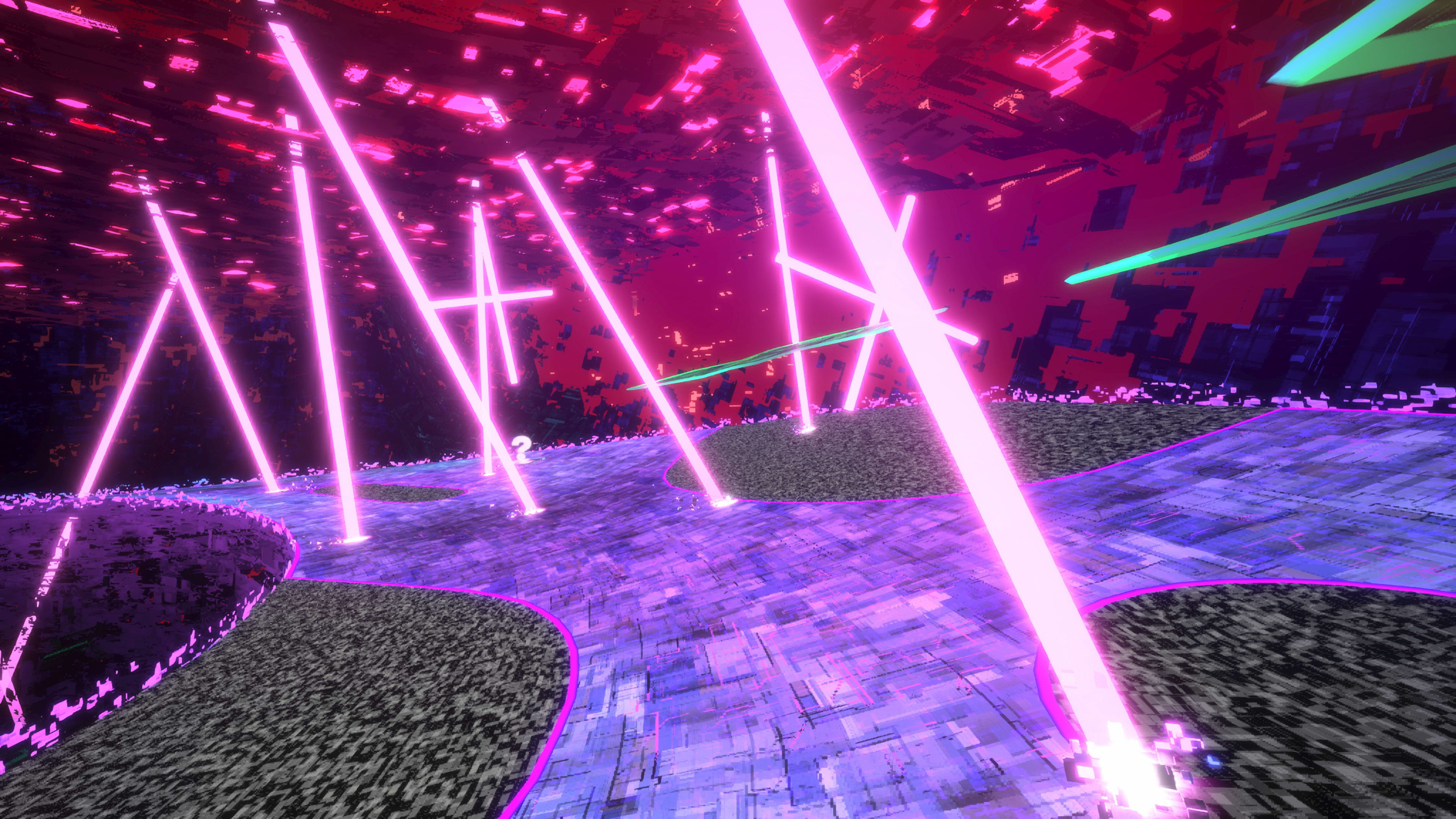
Cyberion Highway is one example. We initially settled on a more techno style, but the first submission didn't have a "children can sing the melody" or "signature melody" part to it. It just repeated over and over, so I asked him to add a melody to it.
This part right here…
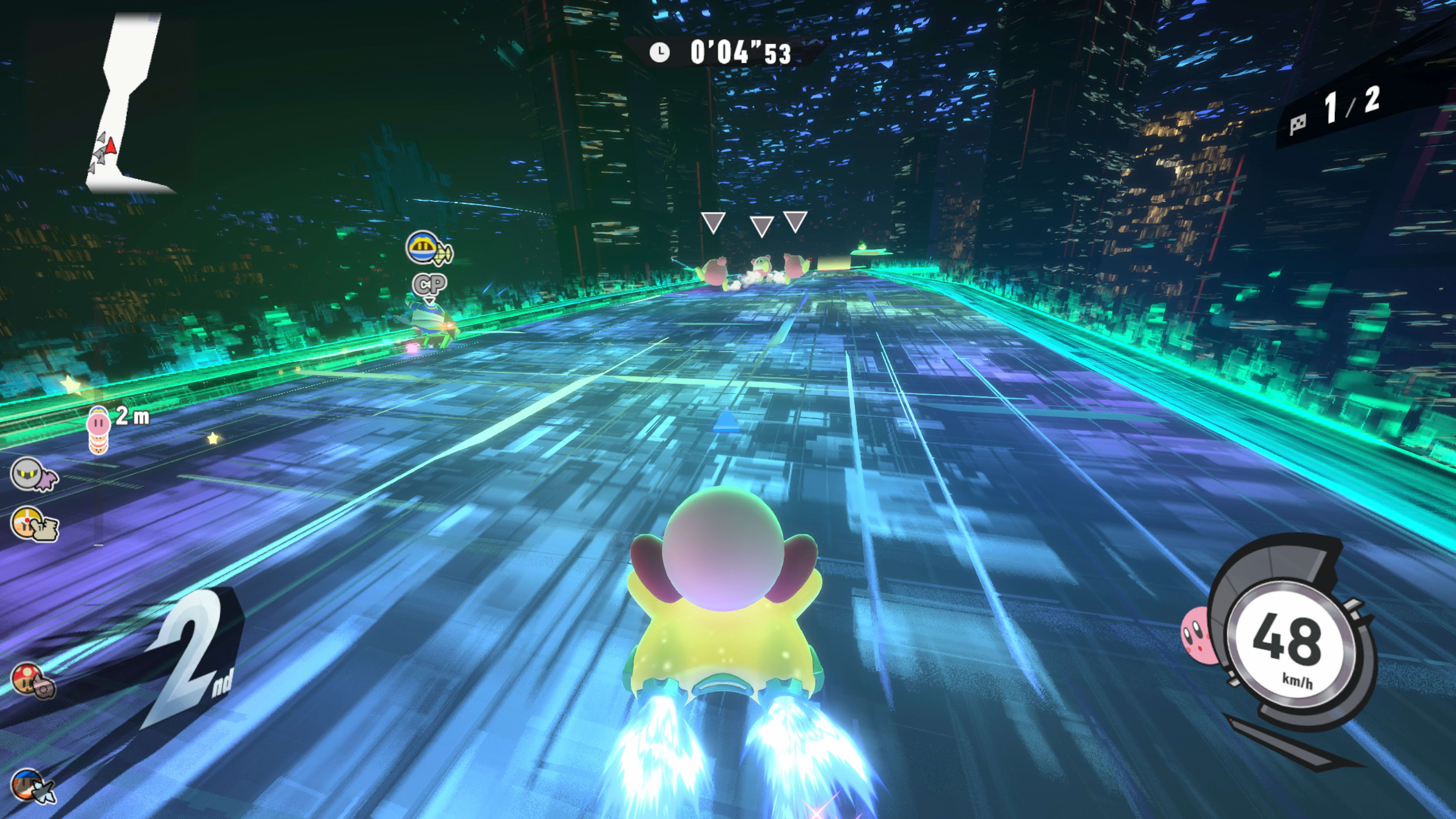
Iwadare:
This is actually the part where I sang and included the lyrics "Air Rider! Air Rider!".
Sakurai:
That's right, you asked me whether you could put in "Air Rider" as lyrics. In the end, I thought having specific English words would sound out-of-place in the Kirby game world, so we didn't go ahead with it.
The vocals were too strong, and that became a problem. They can sound great on their own, like in City Trial for example, where there are so many things happening all at once in the game, the singing often ends up turning into noise. Choruses like the one in Sky Sands are fine, but using vocals alone as background music is tough.
I did go back and forth on whether it could work, but if I jumped on it just because the melody was good, then I'd also have to think about how it would balance with the other courses later on. I mulled it over in my mind... but in the end, even though it's supposed to be a mysterious place devoid of any presence, it started to feel like there was a DJ there, like someone was in control of it. That just didn't feel right, so I let it go.
Sakai:
While making the song, I remember thinking you meant it when you said you had a clear vision about what the final track should sound like, but there was always room for flexibility.
What makes Sakurai-san's direction style distinct is how he can give concise instructions with very few words. He's fast and decisive. As the director, I'm sure he must have a ton of supervisory work piled up, yet he gets back to you quickly and in order.
There were times when I had about four rounds of feedback in a single day, and being able to do that at the final stage of composing is pretty impressive. When you're completely focused on creation and you receive those notes, you immediately know which parts you need to work on and can make the changes right away. It's a huge help.
Sakurai:
Sometimes Sakai-san's replies would arrive very early in the morning. At 5 a.m. or so. (Laughs)
Sakai:
My peak performance hours are between 2 a.m. and 6 a.m. I can focus better in the mornings.
Sakurai:
And I'd also reply to you before my regular work hours had started.
Sakai:
I had no idea what your work hours were like. You were checking emails and sending replies before working hours?
Sakurai:
Well, time is precious. Leaving people waiting takes away from the project, so I try to address things as quickly as possible.
Sakai:
To which I'm grateful for. I really do believe the concise and decisive way you give instructions makes you stand out as unique among your fellow directors.
Sakurai:
I mean, if I were to tell you I wasn't sure which to go with, you'd definitely be like, "Well, isn't it your job as director to make the decisions?". (Laughs)
Sakai:
You know, I've had quite a few jobs that proceeded that way. (Laughs)
Iwadare:
We've worked with all kinds of people, but Sakurai-san's directions are particularly fast, precise, and arrive quickly. And he never wavers.
Sakai:
Another distinction is that the audio supervision for this project was being handled via a mailing list that included both of us. So I could see which parts were going well and which parts weren't for Iwadare-san's songs. I was able to know what discussions you were having about the compositions.
I was able to pick up on things like how they'd been poking at a certain part of Iwadare-san's songs, so I knew what to be careful about myself. (Laughs)
Sakurai:
When we make a Super Smash Bros. game, we have a whole lot of people creating music, so the tracks pass through the sound director before making it to me. But this time we made communication more direct. It was quite a lot of work, but the mutual transparency was for the best. It went really well and was faster, too.
Sakai:
We were able to listen to the tracks as well, so Iwadare-san's skill and speed were in full view. (Laughs)
Iwadare:
Actually, I made it a point to not listen to your songs, Sakai-san.
Sakai:
Oh, really?
Iwadare:
I knew I'd be influenced by them, so I worked on my songs without listening to yours until the final recording.
Sakurai:
I get you.
Sakai:
I see! I did wonder about your lack of reaction! (Laughs)
Iwadare:
Sorry about that.
Out of curiosity, which song did you receive the most feedback on?
Sakai:
I think my record for one track was eleven. The song was Galactic Nova.
Sakurai:
Well, Galactic Nova does have two parts. So really, it was two songs.
Sakai:
When we were working on arrangements of songs from Kirby Super Star (9), Sakurai-san was quite particular about it and gave a lot of feedback. (Laughs) When entering Nova's body, we used the same song, VS. Marx, from Kirby Super Star, but it took a very long time to get right.
(9) A Super Nintendo Entertainment System game released in March 1996 in Japan and January 1997 in Europe. Mr. Sakurai served as the director.
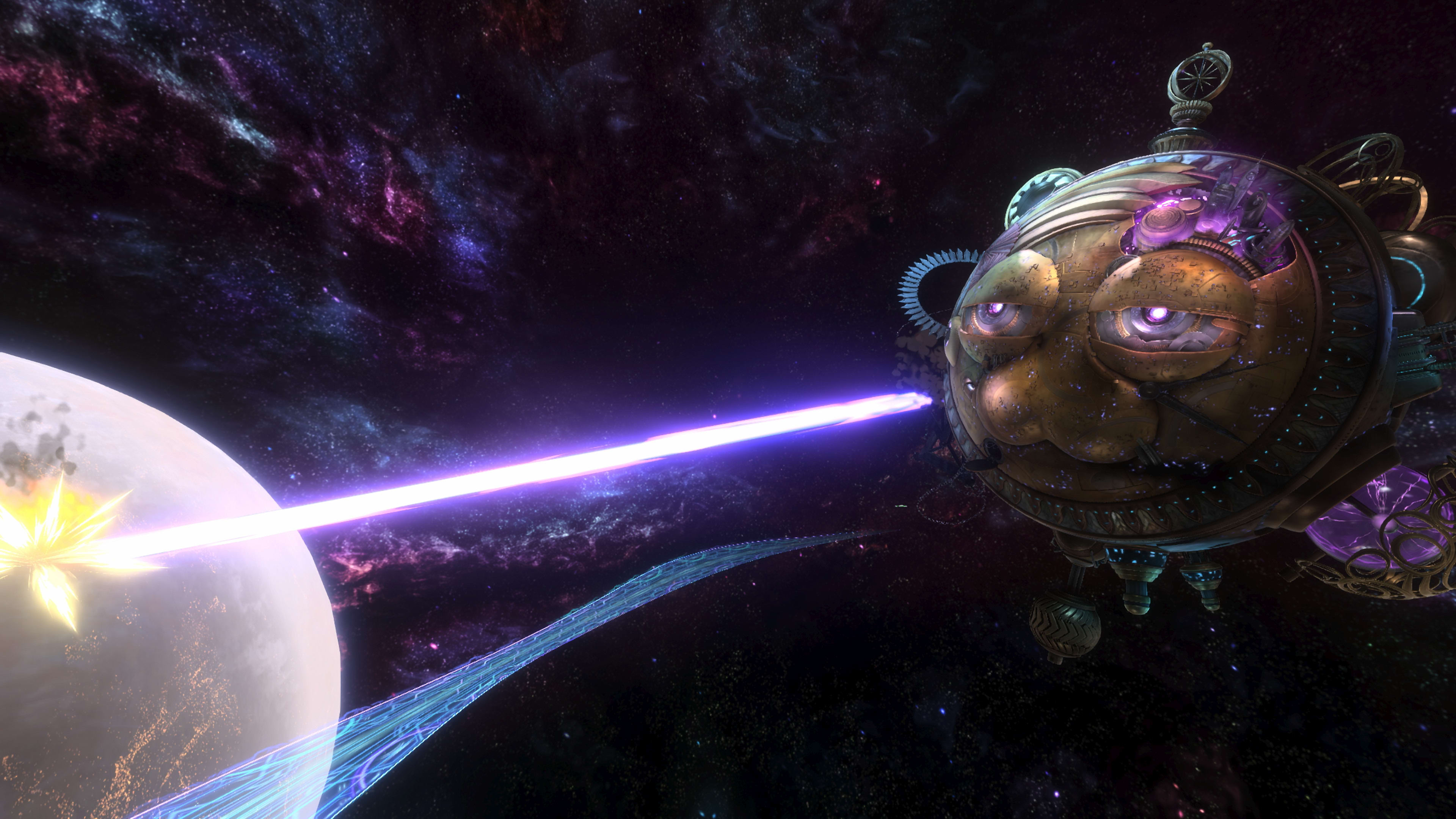
Sakurai:
I wouldn't say I was being particular, just that if I didn't say anything, the fans of the original would be annoyed.
Sakai:
You really do consider the feelings of the players.
Sakurai:
I do. If it's an unannounced song, we can change it as much as we like. But if it's something that's already out there, we have to work on the assumption that that's the only one they want. They don't care about any other revisions.
Sakai:
It's also been pointed out that if we stick too closely to the original, it ends up sounding too similar. (Laughs)
Sakurai:
Not that it's too similar, but that the original as it is doesn't suit the situation. If we could use the song as-is we would, so we do have a purpose to doing it the way we do.
Sakai:
And actually, I was asked to include part of the VS. Marx song for the commission, but I wanted to create an original piece, so I incorporated what I'd transcribed by ear. Then Sakurai-san said, "This is surprisingly fitting". (Laughs) That's how we ended up using that part as-is.
Sakurai:
Although, that wasn't the part we did eleven revisions of. The first and second parts of Galactic Nova are split up. So it was a total of eleven revisions for both sections. It was a large piece, so there were naturally a lot of revisions because of that.
Sakai:
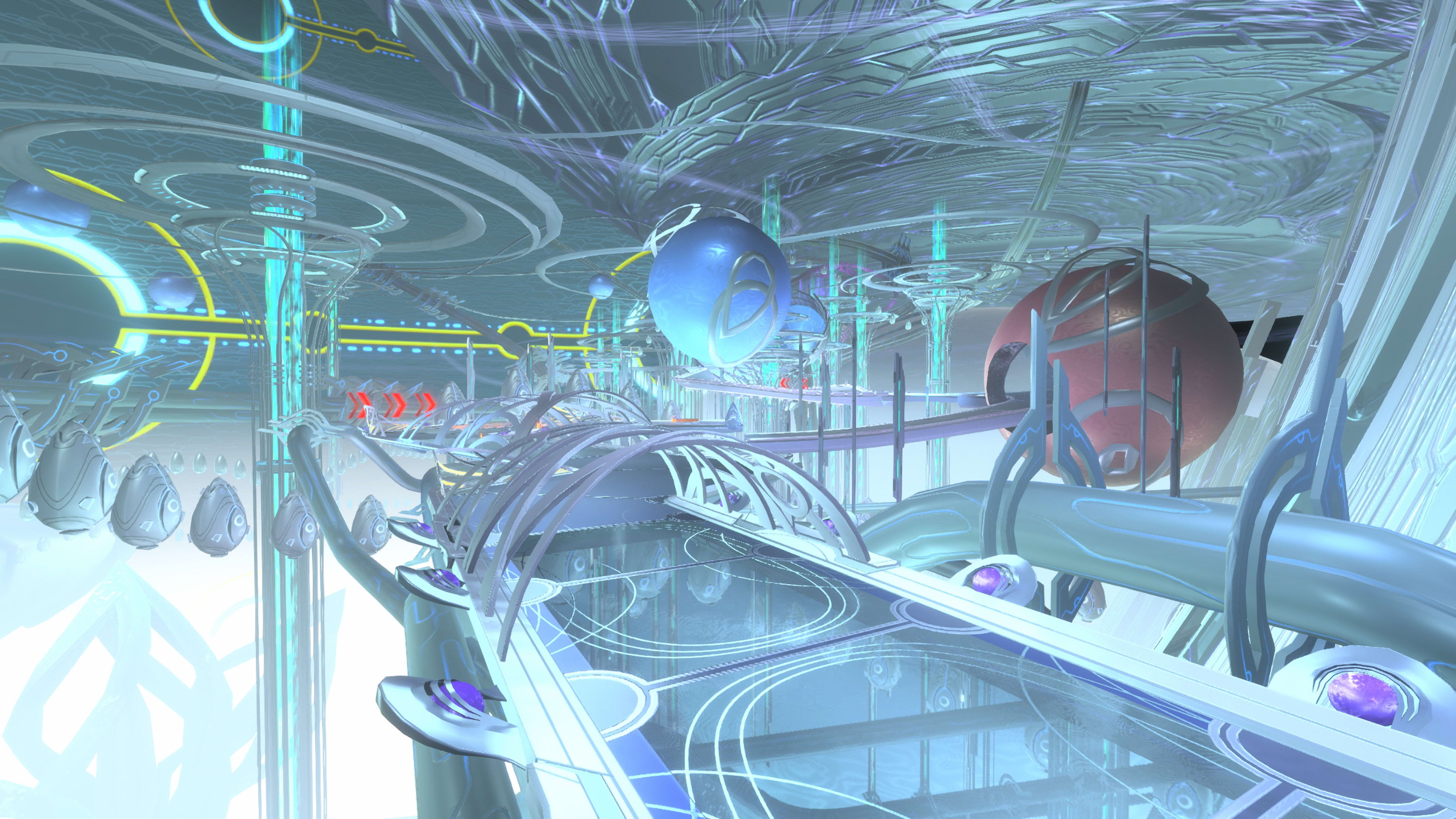
That's true. That was a large piece. I had a lot of ideas for how the grind rails should be implemented as well, so the staff at Bandai Namco Studios would try putting things together based on that, and then redo them. It was an area that was always going to need a lot of work from the start.
Sakurai:
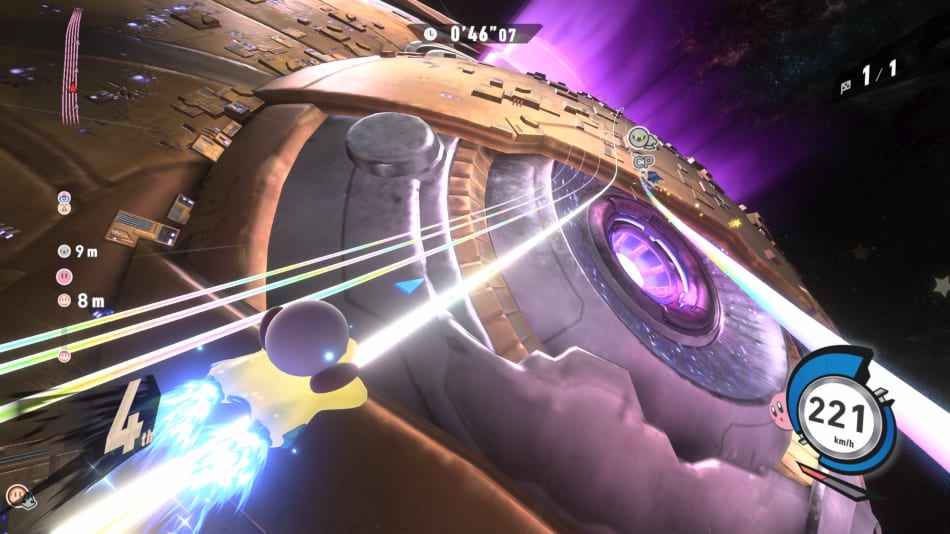
And actually, for most course tracks, one lap was equal to the length of the song. But Galactic Nova is split into first and second parts, so that standard didn't apply. It also had the special requirement of needing a bridge to connect the first and second loops.
Is there anything you found particularly memorable about Sakurai-san's directing, Iwadare-san?
Iwadare:
For me, the only track that was okayed on the first try was the theme song. I don't think there were many others that happened that way.
Sakurai:
You definitely had some that I okayed in two.
Iwadare:
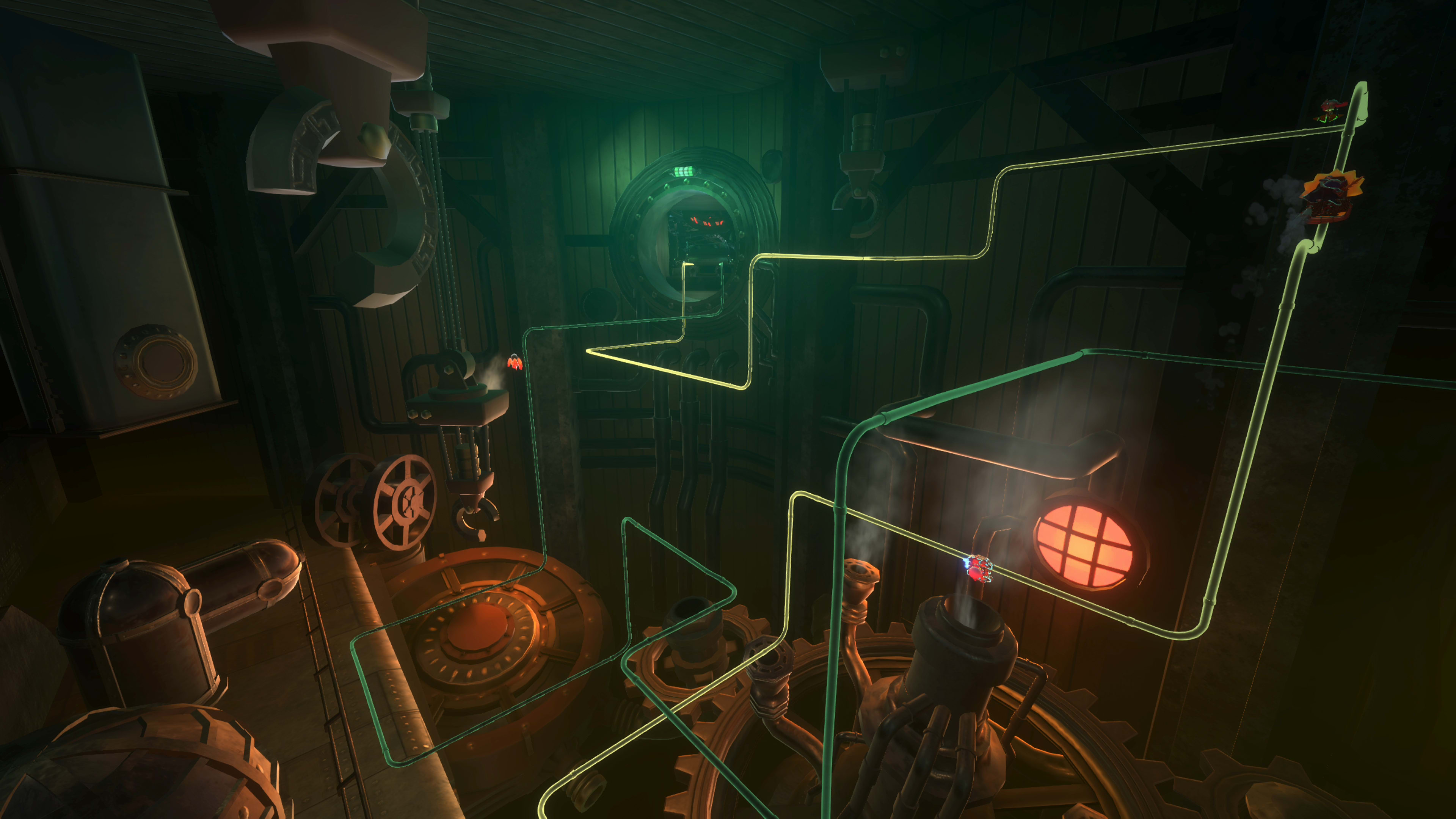
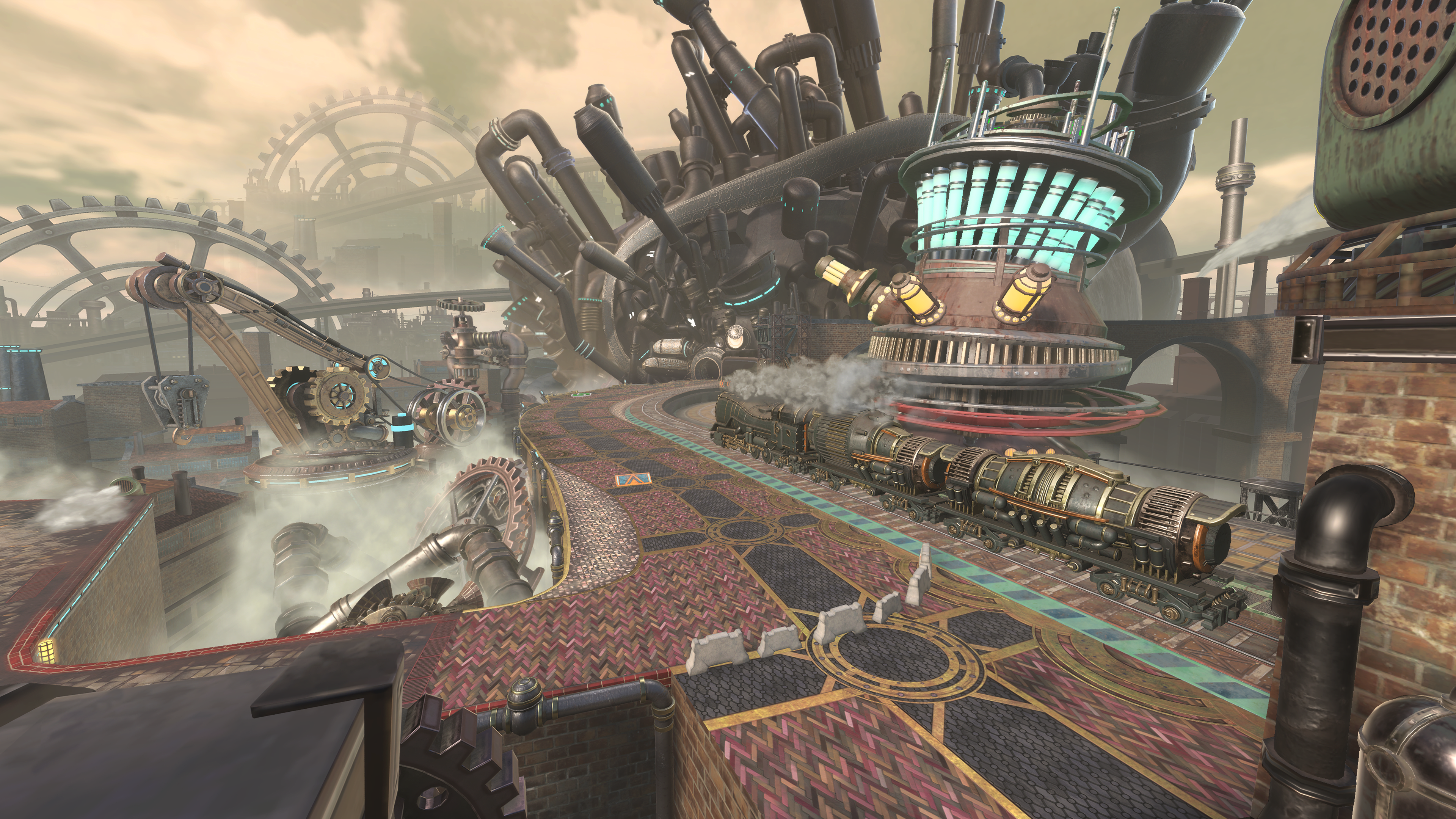
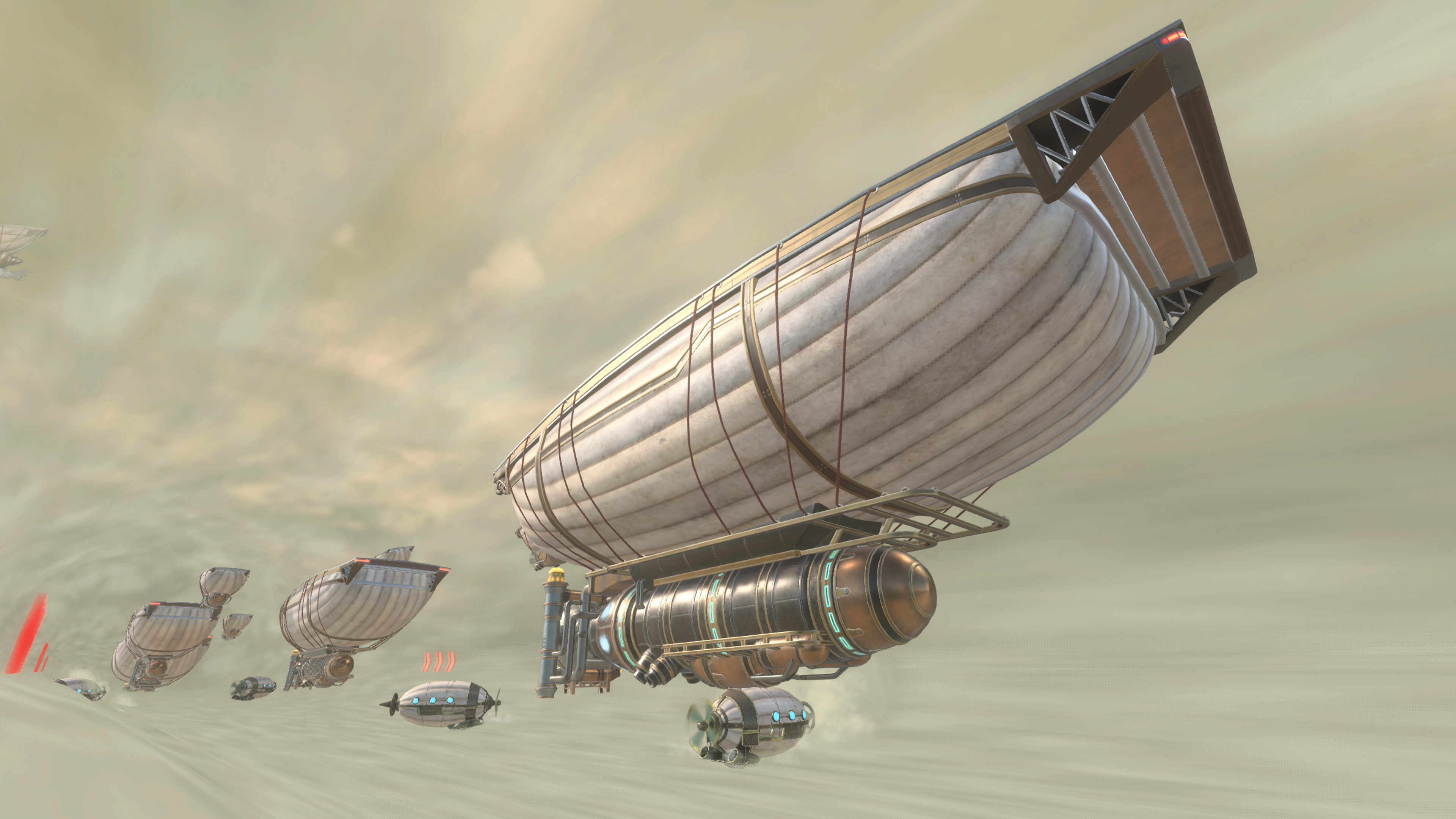
For Steamgust Forge, I was actually making something else at first before suddenly changing my mind and going down a completely different direction…
Sakurai:
That was a good thing.
Iwadare:
I was thinking, "Let's go with an orchestra". And then it was just a matter of adding in a bunch of steam machine sounds and whatnot, hoping it would turn into a fun song.
Sakurai:
I had sent you a sample track with clanking metal sounds in it, but the first track you sent me didn't have any of that at all.
Iwadare:
That's because I thought they were going to be sound effects. If I put sound effects directly into the song, I figured it'd be bad if they played at the wrong time, so I deliberately left them out at first.
Sakurai:
That wasn't the case though.
Iwadare:
No, it wasn't. (Laughs) I then thought it might actually be better to include them, so that's what I went ahead and did.
Continue to chapter 3: Revealing the lyricist of the main theme
Over 100 tracks from Kirby Air Riders are now available to listen to in the Nintendo Music smartphone app, available exclusively for Nintendo Switch Online members.
Apple and the Apple logo are trademarks of Apple Inc., registered in the U.S. and other countries. App Store is a service mark of Apple Inc.
Android, Google Play, and the Google Play logo are trademarks of Google Inc.