Ask the Developer Vol. 22: Splatoon Raiders — Chapter 2
22 July 2026
Some of the images and videos shown in text were created during development.
This article has been translated from the original Japanese content.
Chapter 2: I’ve wound up in an outlandish environment
Chapter 2: I've wound up in an outlandish environment
So, you'd settled on the core gameplay for the “ultimate multitasker” experience. I wanted to ask how you then went about expressing that through the game’s world, but it just struck me that you're all in uniform.
Everyone:
...
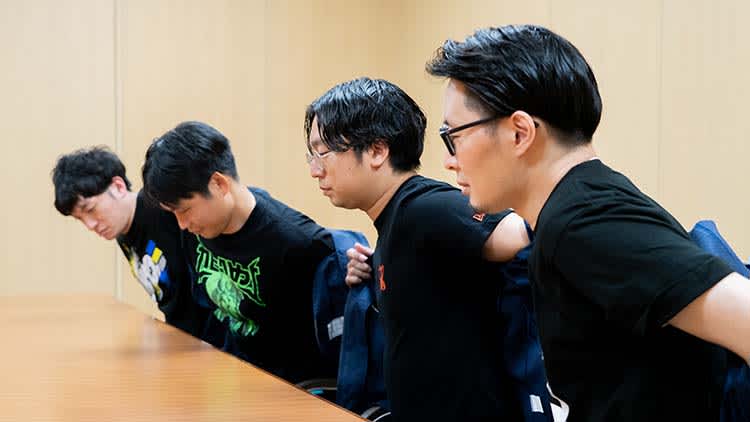
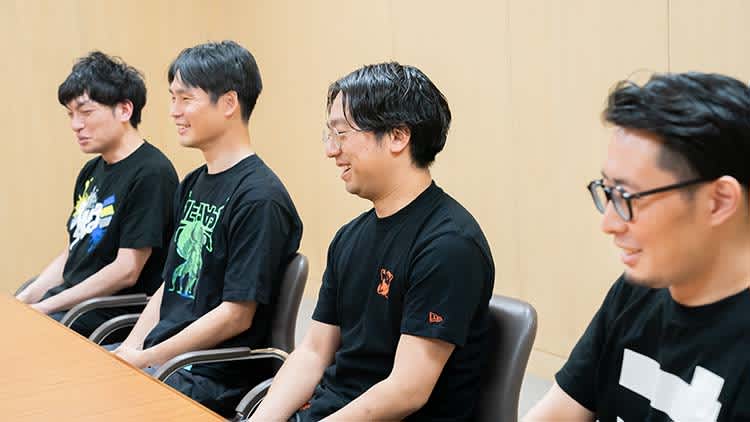
Ah, I knew it―those uniforms were concealing your trusty t-shirts all along! (Laughs) Now, back to our conversation. Please could you introduce the game's setting?
Ito:
The game takes place on the Spirhalite Islands, a group of uninhabited islands. Right from the start, we didn’t really consider any other options besides islands. Since this is a spin-off title and differs from previous entries in the series up to Splatoon 3, we thought it best for the setting to be remote from those too, geographically. Islands seemed like a natural choice. This also aligned with the gameplay really well. The island setting worked well in lots of ways. For example, simple gadgets and weapons can be customized and upgraded using things that have washed ashore.
Sonoyama:
In terms of regions, it belongs to the Splatlands, but we envisioned it as a remote location―so remote that you’d need a helicopter to reach it―and it even has a different climate.
Ito:
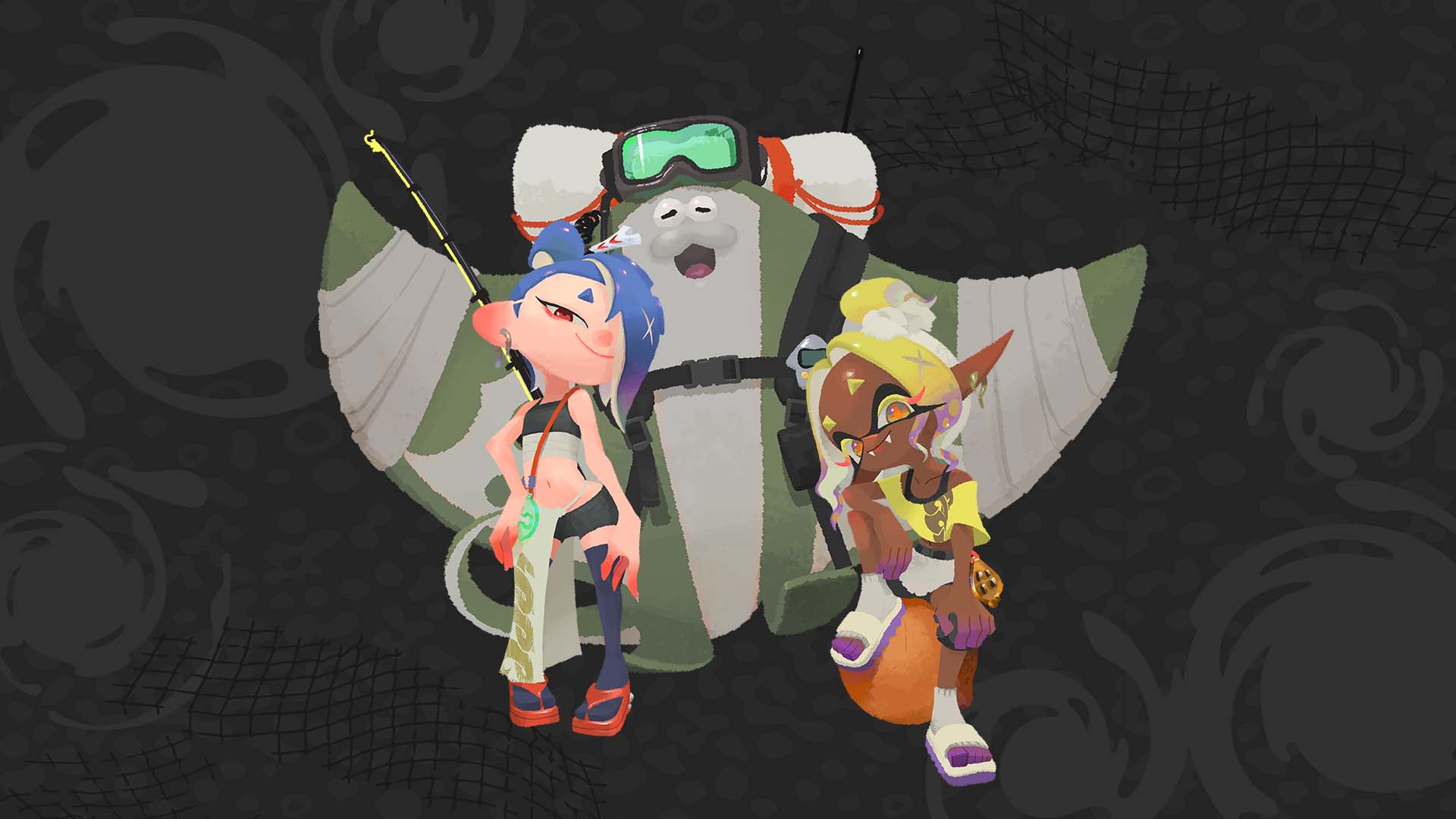
Given how far away it is, we were able to come up with a storyline where Deep Cut (3) flies there from Splatsville by helicopter to hunt for treasure. Setting the story on Salmonid-infested islands with a different climate resulted in a world that fit this new gameplay perfectly.
(3) A trio of musicians who appear in the Nintendo Switch game Splatoon 3, consisting of Shiver, Frye, and Big Man. They’re also the hosts of Anarchy Splatcast in Splatsville.
In the Splatoon series up to now, the world has centred on so-called urban environments, where street culture has taken root. Setting it on an uninhabited island must have changed the design quite dramatically?
Sonoyama:
In previous entries, due to the core gameplay of inking turf, environments tended to feature a lot of horizontal and vertical surfaces, with stages mainly constructed from inorganic materials. Developing this game for the Nintendo Switch 2 hardware, we benefitted from improved graphical capabilities and processing power. This allowed us to better depict organic, natural elements, and we wanted to take full advantage of that.
Ito:
The terrain features gentle curves covered in grass, and being able to ink over grass is something we didn’t have in previous entries.
You mentioned that the development team were set on the game taking place on islands. Did everyone share a clear vision of what those islands would be like?
Sonoyama:
Once we'd decided on an island setting, since it would be remote from previous locations, we wanted it to be full of adventure. So, we started out creating concept art like this.
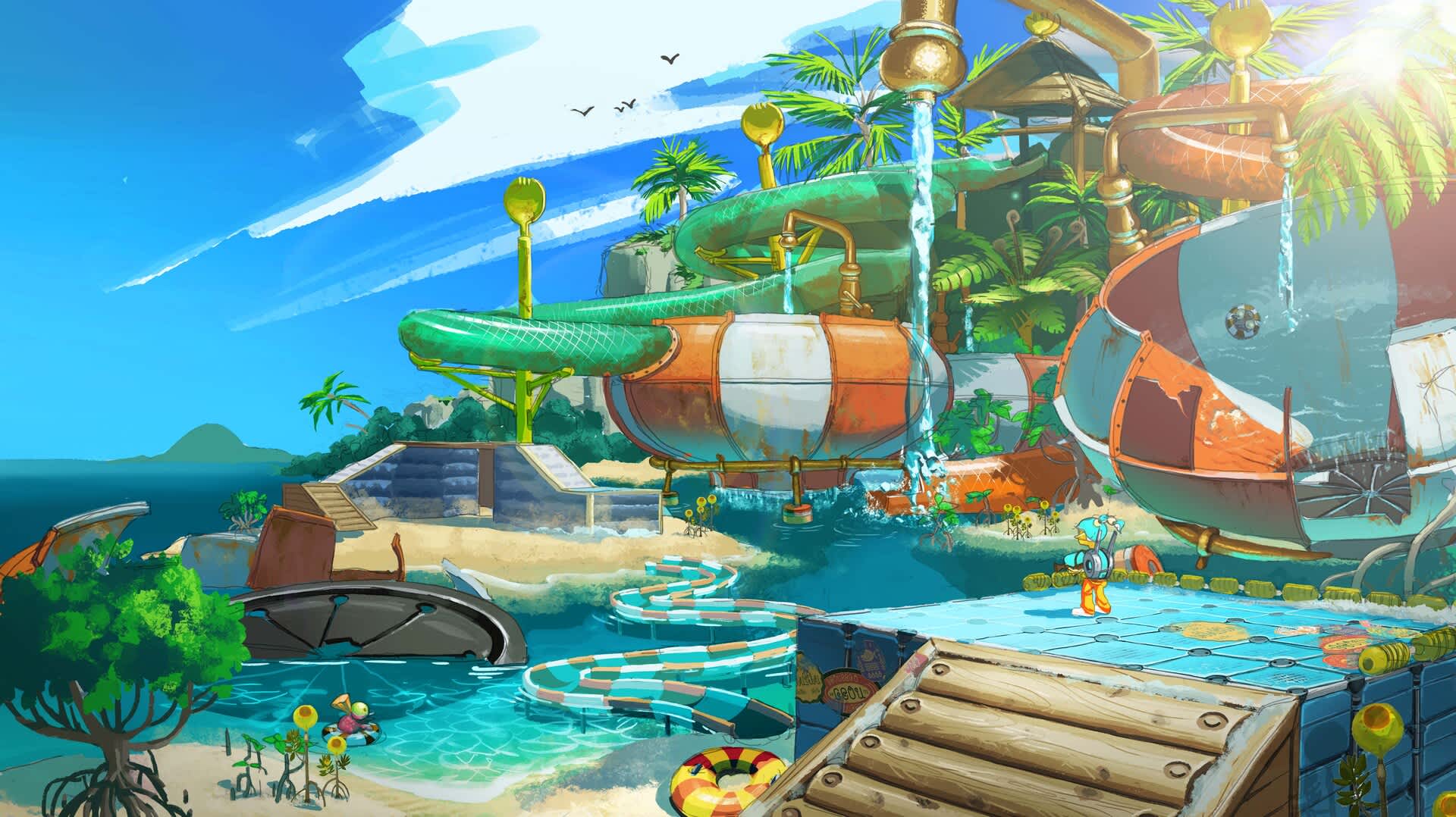
You described the islands as uninhabited, but it actually has a bright, refreshing feel. The Salmonids playing with swim rings also give it a cute touch.
Sonoyama:
Yeah, we felt it had turned out nicely and thought implementing that in the game could be fun, but it just didn’t work out at all. (Laughs)
Oh really? I thought it would make for a fun game.
Sonoyama:
Somehow, with this setting, it started to feel like we were unfairly picking on the Salmonids, who were simply going about their lives happily on the island, and it became a bit difficult to accept emotionally. On top of that, it felt like we were attacking the Salmonids and taking their cherished treasures by force, and then basking in our spoils.
When you put it that way, it does seem a bit unfair to the Salmonids.
Sonoyama:
I still remember the feedback we received from team members about a scene where the Salmonids looked like they were chatting. Maybe it was because the Salmonids were depicted in a way that made people sympathise with them as living creatures, but without any prior discussion, everyone who played the prototype kept saying, “Poor Salmonids!”. (Laughs) We thought we needed to do something about that feedback, which prompted us to significantly rethink the visual direction. However, development had already progressed to a certain point. We were in a phase where we couldn’t really change things like the line-up of Salmonid or the overall characteristics of the terrain, so we thought about what we could do within that scope.
Tamura:
Even when it came to the background music, when we were creating it based on the resort-like concept art, it had an adventurous and friendly vibe. That only added to the feeling that we were going out of our way to attack these cute, innocent creatures. We started to doubt if we were heading in the right direction, and the motive for progressing through the game became unclear.
Sonoyama:
So we made a major shift, dramatically changing the design direction with the key concept of “I’ve wound up in an outlandish environment".
An outlandish environment?
Ito:
Enemies in the game are tough and it’s difficult to clear stages smoothly on your first try, but as you grow stronger, it becomes possible. Repeating this cycle is a core part of the gameplay. Naturally, this means players end up losing more often, so unless the enemies feel “outlandish” to begin with, there's no real justification for those losses. By cultivating an atmosphere where it's natural to think, “Of course I lost – the islands and enemies are just that outlandish”, we were finally able to create a proper sense of satisfaction in the gameplay.
Sonoyama:
I think that was a major turning point, both in terms of the art and sound. It helped shape that feeling of inevitability of losing in such a place, facing such enemies. So we tried adding things like trash, strange objects, and negative imagery, but with the picturesque ocean and inviting white sand as the foundation, it didn’t quite end up feeling like an outlandish environment.
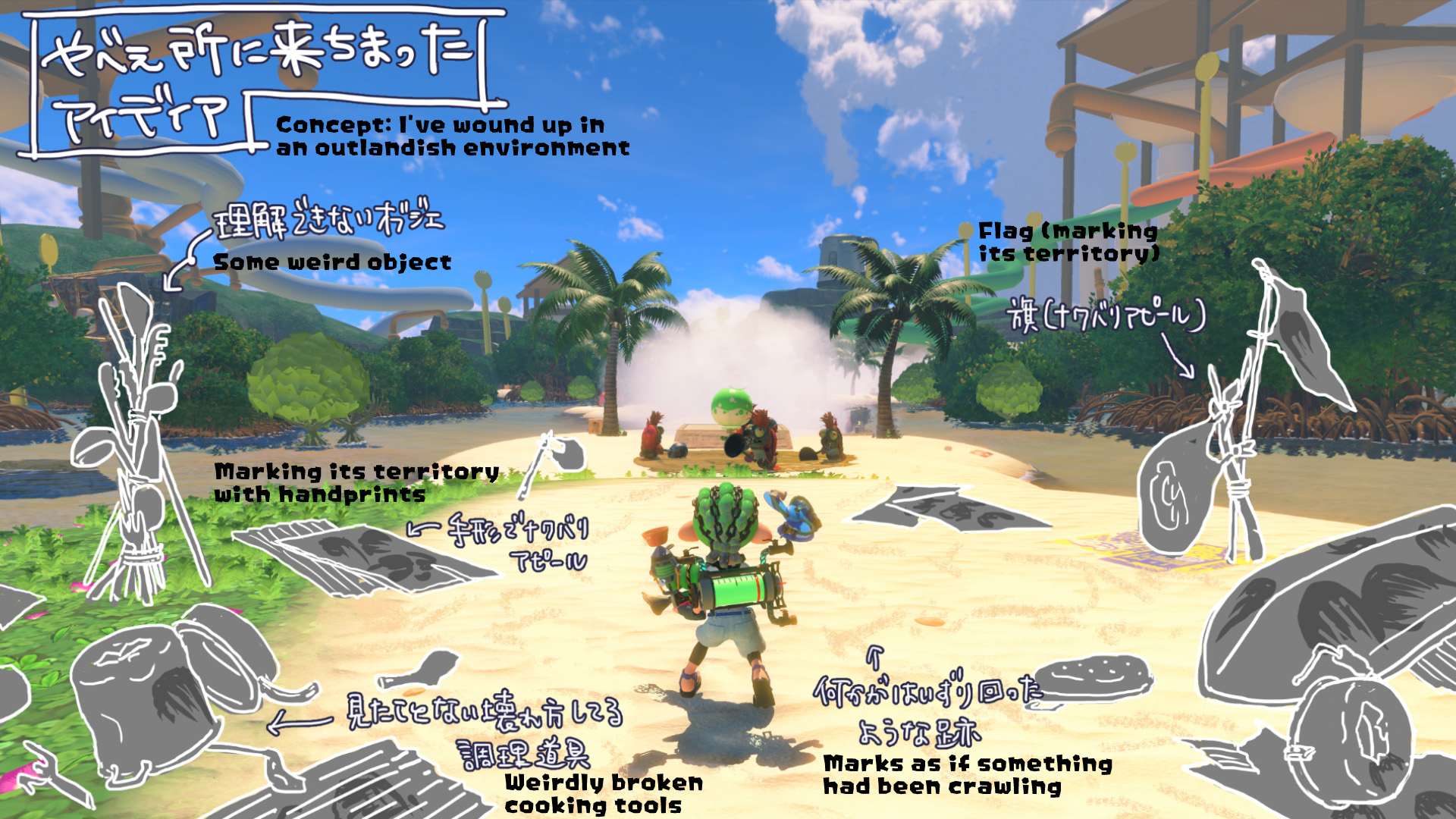
That being so, we decided to change things from the ground up, reworking the entire design, from objects in the environment all the way down to finer details like lighting. We also made the Salmonids look more out of the ordinary than in previous games. Here's the concept art we arrived at after a bit of trial and error.
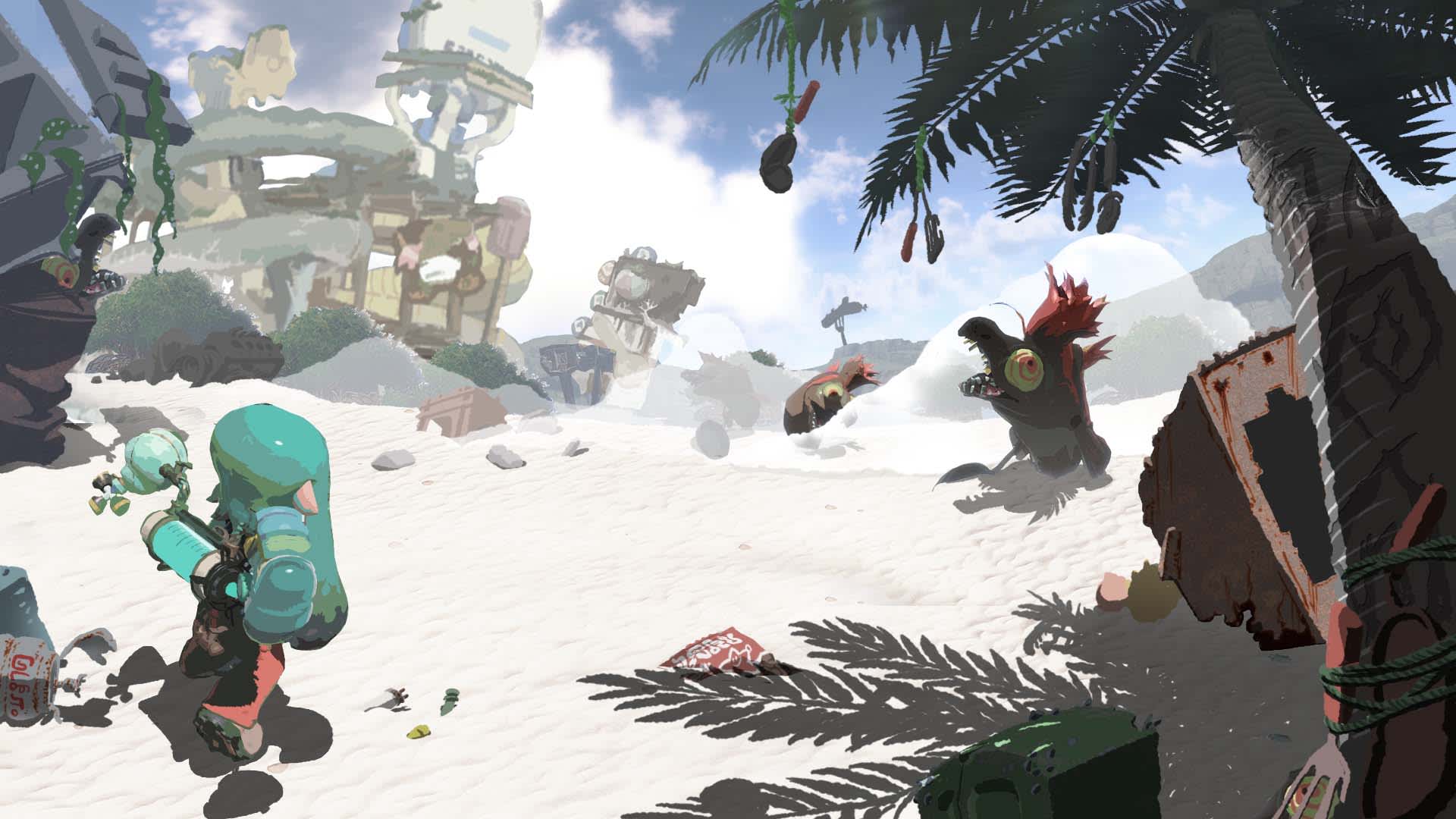
It's a complete change from what we saw earlier. This scene feels unsettling. Things are strewn all around, and even the Salmonids’ expressions are disturbing, somehow.
Sonoyama:
Although we shifted direction, development was already quite far along, with major elements like the gameplay and the terrain already in place. So we kept features like the water slide seen in the initial concept art, but reworked them to look broken and dilapidated, and added rust throughout the environment.
Inoue:
Crucially, the moment you set foot there, you immediately get the sense that something isn't right.
Sonoyama:
When it came to translating that idea into the design, we had to spend quite a bit of time asking ourselves what defines an “outlandish environment”, and go through a lot of trial and error. Everyone on the team shared their own interpretation of "outlandish environment”, and we did a lot of brainstorming around those ideas. For instance, we discussed things such as the eeriness of landscapes shaped by geological shifts, where elements from the sea and mountains coexist. An indescribable sense of discomfort. A place that feels completely unfamiliar. We also talked about enemy Salmonids that are unpredictable, so you can't really tell where they're going or what they're trying to do.
Even the background music during gameplay gives you the feeling that you can’t let your guard down.
Sonoyama:
Right after we shared this “outlandish” concept art, the sound designer put together a piece of music saying, “Something like this, maybe?”, and it ended up being a perfect match for the uneasy tone we were aiming for.
Tamura:
We wanted players to feel like they've wandered into a place filled with Salmonids behaving in strange and unsettling ways. The Spirhalite Islands are located far away from the Splatsville, and they couldn't be more different. When we worked on the background music for this game, we aimed to create something that would make comfortable listening for the Salmonids themselves, but be somewhat unsettling to our ears, or to Inklings and Octolings. That vibe was important to us.
One of the appeals of the Splatoon series is the idea that bands are behind the music. What's behind the “outlandish” tracks this time?
Tamura:
We created the music while imagining it to be something the Salmonids of the Spirhalite Islands are familiar with, as if it were recorded locally. (Laughs) The Salmonids that wander around the islands have a strange and unsettling presence, and you can't really tell what they're thinking. That led us to look into immersive genres like techno, dub, and minimal music. Those genres are typically centred on electronic instruments. While keeping that musical aesthetic, we imagined how the Salmonids might recreate it using objects washed up on the island. By doing so, we were able to give the game its distinct, slightly unnerving atmosphere. I think it matched the concept art very well.
In past Salmon Run modes, the music also had a very different feel from Turf War battles in urban settings, almost as if it were driving the advancing Salmonids forward.
Tamura:
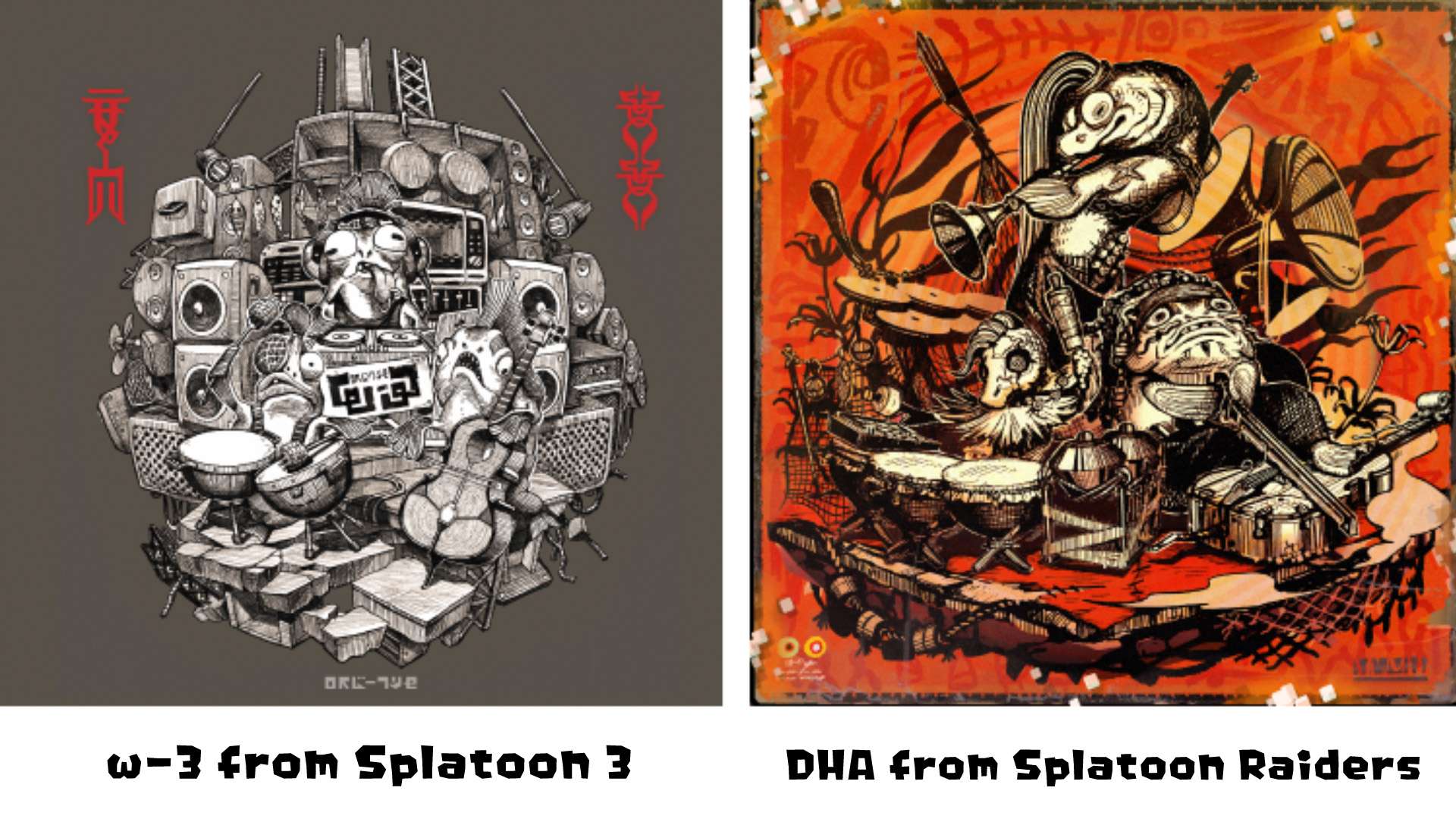
Of course, there are also plenty of dungeons where you can hear music in the style of the classic Salmon Run tracks. In Salmon Run, the music is played by a Salmonid band known as ω-3 (Omega Three), and in this game, a new Salmonid band, sort of like distant relatives of ω-3, plays music that boosts the Salmonids’ morale.
Tamura:
We kept the cello and timpani that stood out in Salmon Run as the core sounds that fire up the Salmonids, and by incorporating a wide variety of traditional instruments, we were able to create tracks with a distinctly different flavour from ω-3.
Being surrounded by those kinds of sounds while swarms of Salmonids close in on you really leaves you thinking, “This place is outlandish”. Speaking of Salmonids, how are the ones in the Spirhalite Islands different from those seen previously in Salmon Run?
Inoue:
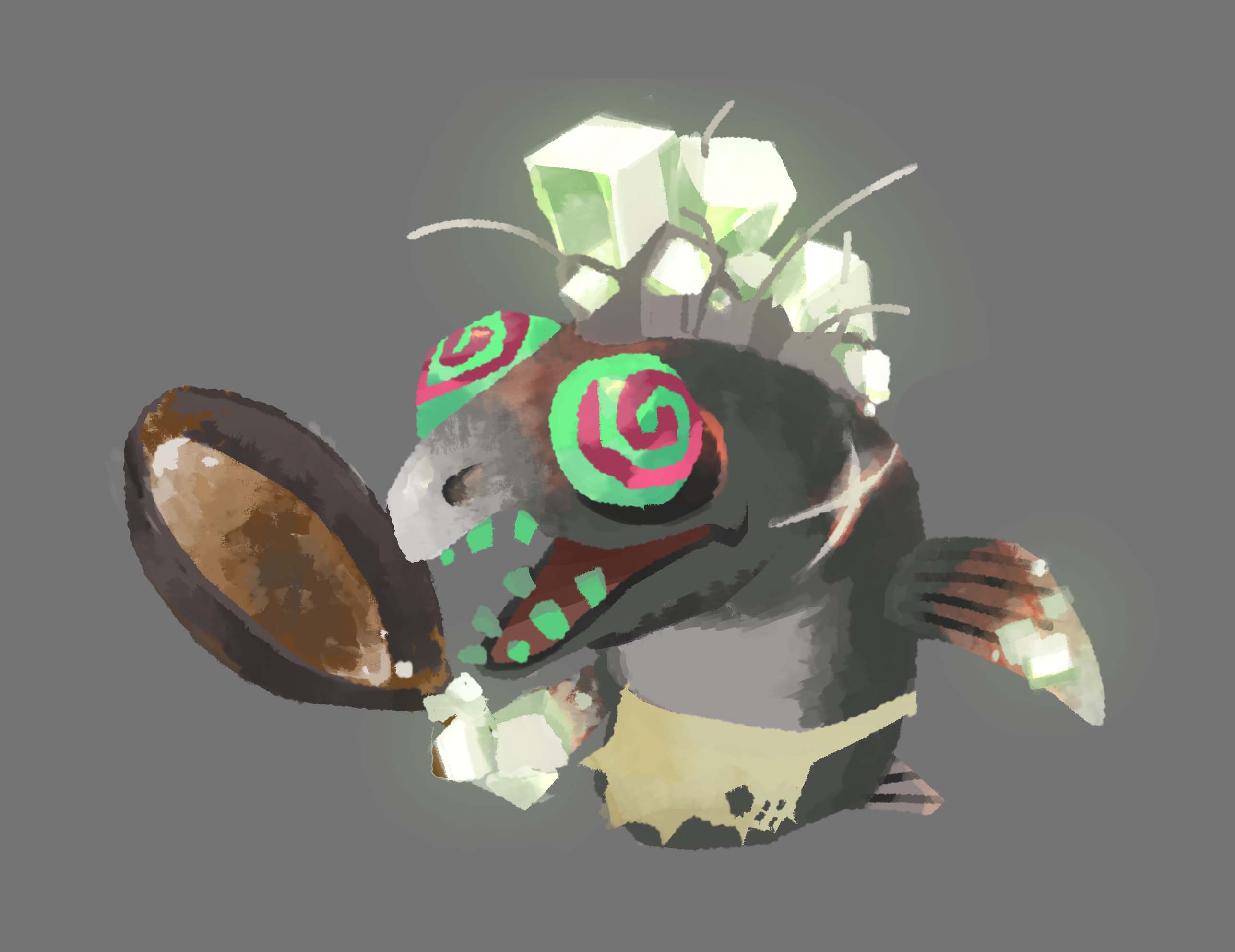
The “salt” found on the Spirhalite Islands has mysterious properties that make the Salmonids more aggressive. Throughout the series, Salmonids have felt a peculiar longing to be eaten deliciously. Since salt is the seasoning that best brings out the flavour of salmon, they’re irresistibly drawn to it.
Ito:
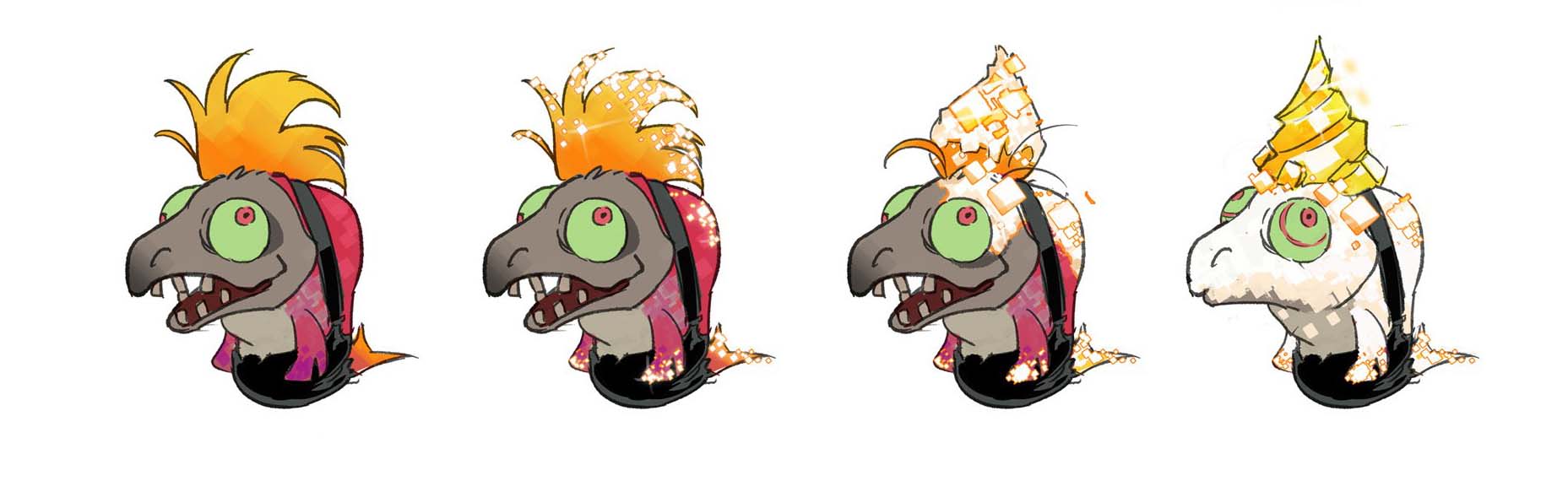
Drawn in by the mysterious salt of the Spirhalite Islands, the Salmonids gather there, and as the game progresses, they become increasingly coated in salt, and stronger as a result.
Sonoyama:
Eventually they start to look almost like they've been baked in a crust of salt. (Laughs)
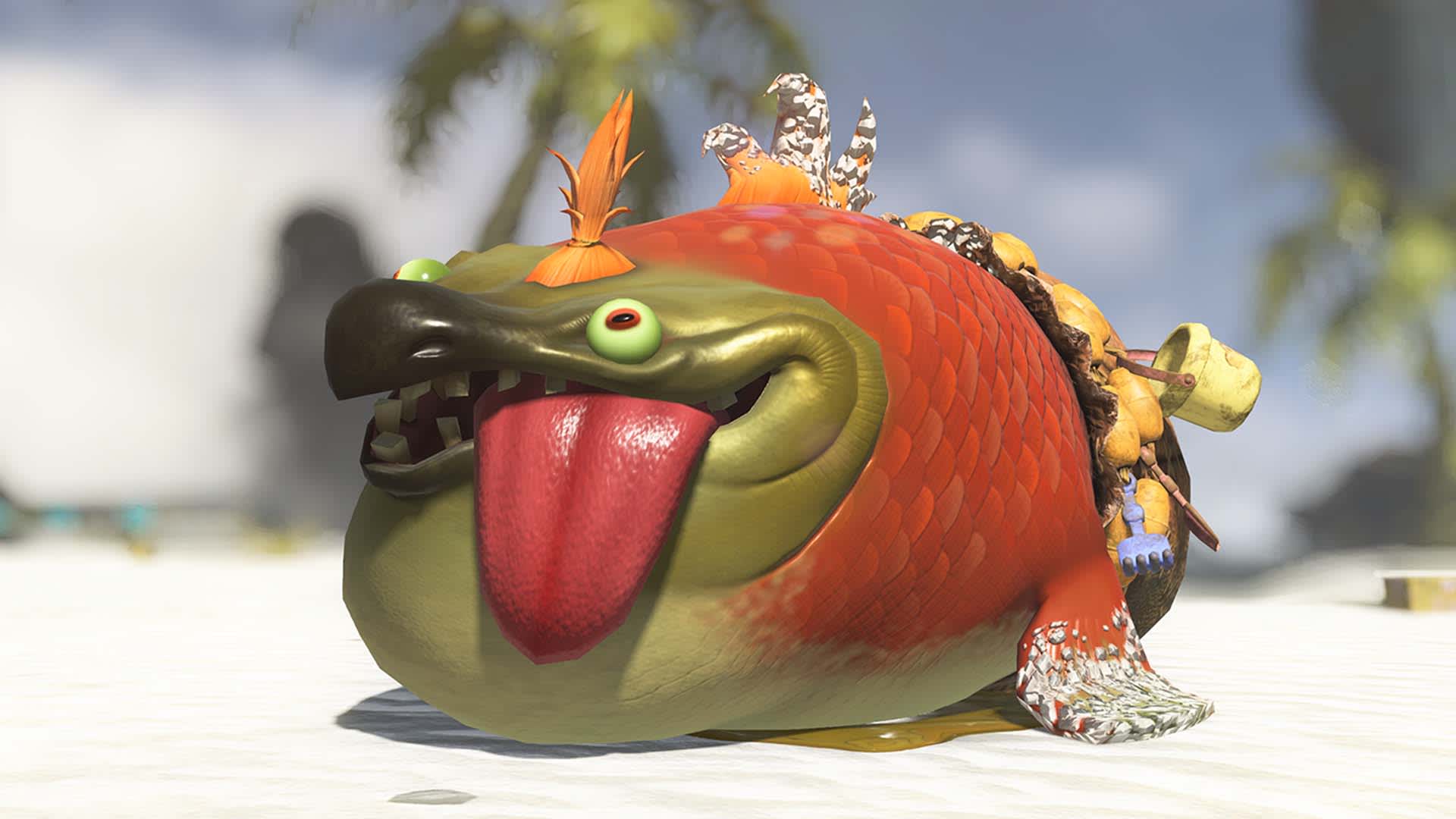
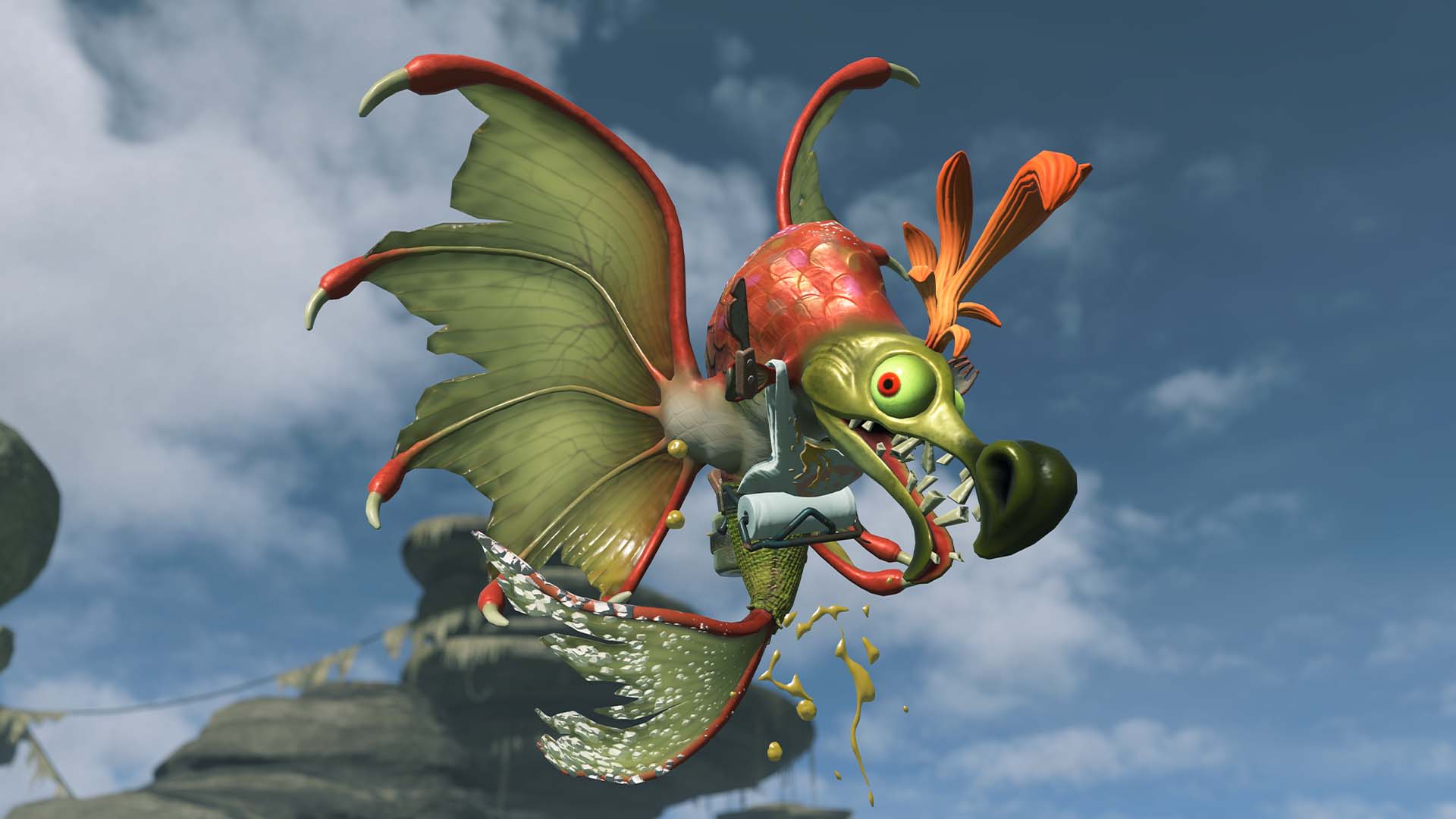
Come to think of it, quite a few of the new Salmonids in this game have food-inspired names, don’t they?
Ito:
The Salmonids didn’t come up with the names themselves. It's simply what Inklings and Octolings call them.
Inoue:
Since Salmon Run is essentially a part-time job where you collect Power Eggs, the name of each Salmonid comes from the kind of shorthand words that teammates would use to communicate about it as efficiently as possible on the job. They're like the nicknames you give to bad guys in detective dramas. Even if it has a proper fish name, when it shows up out of nowhere and tries to swallow you whole, you end up calling it Maws, or something like that. The idea is to use words that are clear, unmistakable, and impactful when shared among teammates.
Ito:
We call it Salty Tongue because it sticks its tongue out, and Salivator because it's constantly drooling. (Laughs)
You're making me kind of hungry.
Everyone:
(Laughs)
Sonoyama:
Also, the Spirhalite Islands are designed to bring out the Salmonids' flavour. In colder areas, they get frozen, while in hotter areas, they get boiled. From the Salmonids’ point of view, the Spirhalite Islands are the perfect place, ideally suited to making themselves delicious. (Laughs)
It really shows how different they are as a species from Inklings and Octolings, who are shaped by street culture. So as the Salmonids evolved in their own way, the Spirhalite Islands gradually became what you might call an outlandish environment.
Inoue:
That's right. The word “Raiders” in the title captures the idea of players entering places overrun by Salmonids where they’re clearly not welcome.
Ito:
Since the game revolves around hunting for treasure, the idea is that you have to venture into outlandish environments if you want meaningful rewards. I think that concept came together nicely.
Inoue:
We always put a lot of thought into how to make not just the gameplay, but also the world and characters, feel unmistakably Splatoon. Somehow, it usually ends up involving seafood or cooking. (Laughs)
Continue to Chapter 3: The most versatile protagonist

