Ask the Developer Vol. 21, Tomodachi Life: Living the Dream – Chapter 2
15 April 2026
Some of the images and videos shown in text were created during development.
Some game footage and screenshots are taken from the American English version of the game. This game is fully localised into British English.
This article has been translated from the original Japanese content.
Chapter 2: Make anything you want
Chapter 2: Make anything you want
So the development team had a shared understanding of what Mii characters are, rather than focusing on what’s possible with current technology. It sounds like that enabled the series to evolve while preserving the "Mii-ness" that's unique to Tomodachi Life. Speaking of evolution, the freedom to customise Mii characters has expanded significantly in this game, hasn’t it?
Kageyama:
You can of course recreate faces you made with past Mii characters, but now I believe it's possible to go a step further and really fine-tune all those details. Along with new parts, more features like eyelashes, eyelid creases, and the mouth, can now be adjusted to different angles. With the addition of sub colours for hair, your Mii character can also have two-toned hair. Not only can you create characters with accurate likenesses, but we’ve made other adjustments to accommodate players' needs, such as exaggerating certain features, making them more handsome, cuter, and so on.
Takahashi:
We also learned from past titles that some players want to create original characters, not just people who exist in real-life, like themselves, or their family and friends. So, we made it possible for players to create any kind of Mii with a bit of creativity. More freedom to adjust skin tone and the colour of individual facial features means it’s now easier to create non-human Mii characters, such as animals or aliens.
Kageyama:
You can also draw face paint however you like, so depending on how you make use of it, you can draw whiskers, like this.
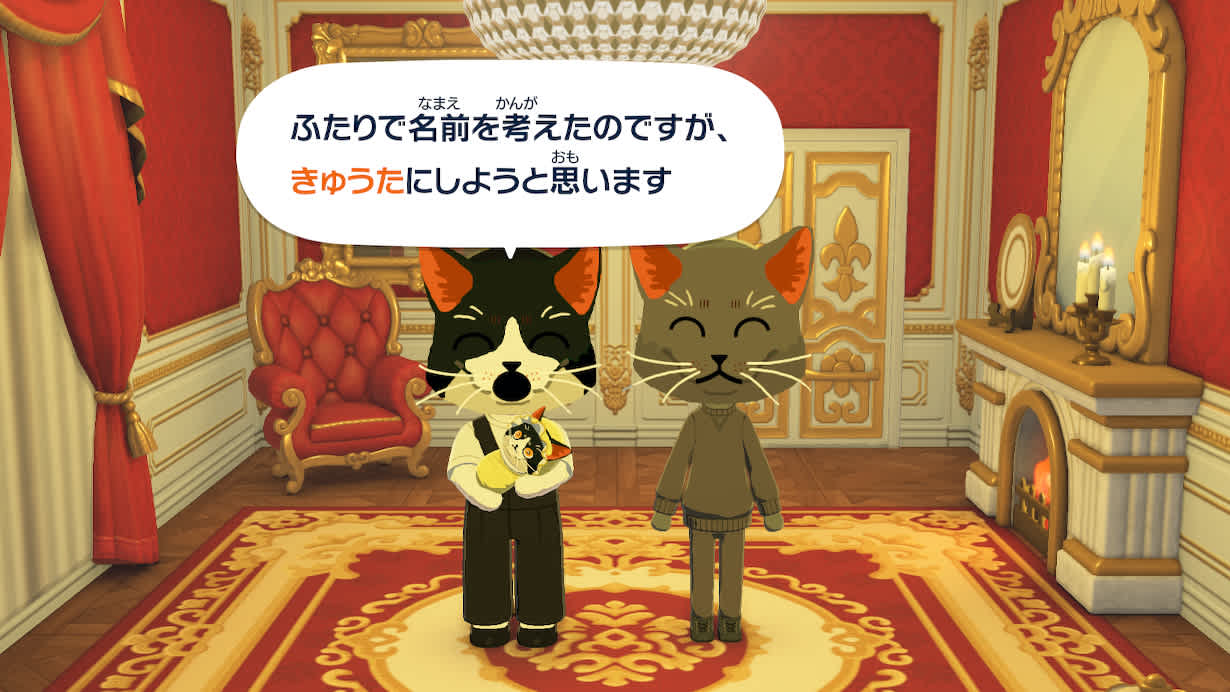
"We like the name Kyuta. What do you think?" (Image created during development.)
Ohnishi:
By the way, babies born to Mii characters inherit the characteristics of their parents. So when these cat-like Mii characters had a baby, it inherited their cat-like qualities, which surprised even the development team. (Laughs)
Takahashi:
We wanted to accommodate players’ wishes for the kind of Mii characters they want to create. Compared to the previous game, you have more freedom to choose not only their design, but also their dating preferences and gender, as well as the type of outfit they'd wear to an event such as a wedding. We did everything we could to enable players to create the characters they wanted.
You're really giving players a lot of freedom. But if you give them too much freedom, couldn't those who aren't confident in drawing or creating Mii characters feel intimidated?
Takahashi:
For those players who don’t have much experience creating Mii characters, we've implemented a new feature that lets you create them automatically by answering some questions. For example, whether they should have long hair or short hair, or what shape their face, eyes and mouth should be. After answering all the questions, a Mii character that matches the answer will pop up. Why don't we give it a try right now using Sakamoto-san's face?
Oh, it does give the right vibe, even though it was just based on our answers! (Laughs)
Takahashi:
Even players who struggle with the traditional method of Mii creation should find it easy, as all they have to do is answer some simple questions. However, it does feel a bit unsettling when you’re answering the questions, wondering what kind of Mii character you’ll end up with. (Laughs) Even if the character doesn’t look like the person you had in mind, you can still joke around like, “Who on earth is this?!” or, if you're with a group of friends, go, "You really nailed the eyes!" It makes me happy to think of players developing a fondness for the Mii characters they’ve created.
Enjoying the inside jokes that result from your own creations is definitely one of the highlights of this game.
Ohnishi:
In Tomodachi Life, you can tell Mii characters things, and in this game, characters sometimes bring up those things with each other unexpectedly.
Takahashi:
For example, when one Mii asked me, “What's a topic you could talk about for hours with your friends?”, I answered, “My frozen shoulders have fully recovered”. Just when I’d forgotten I had that conversation, there was a group of Mii characters chattering. I went closer, wondering what they were talking about, and it said, “They are passionately talking about frozen shoulders being cured”. (Laughs) So the things you've told them will suddenly pop up in unexpected moments.
Players can give a Mii character all sorts of gifts, but how they use those gifts is entirely up to them. That’s what it means to be a Mii in Tomodachi Life, right?
Takahashi:
Right. Besides words, you can give Mii characters food, clothing, and even so-called "treasures", like games and books. I hope everyone enjoys seeing a variety of reactions by giving them all sorts of different things. And the biggest gift you can give to the Mii characters is the island itself. (Laughs) Being able to freely customise the island where Mii characters live is another of the game's highlights, and one of the UGC mechanics we put a lot of work into. I brought one example to share with everyone today. This is an island called Development HQ Island that one of our staff members created. Everything you see here uses the Island Builder feature to recreate the development team's office, which is inhabited by Mii characters of the development staff.
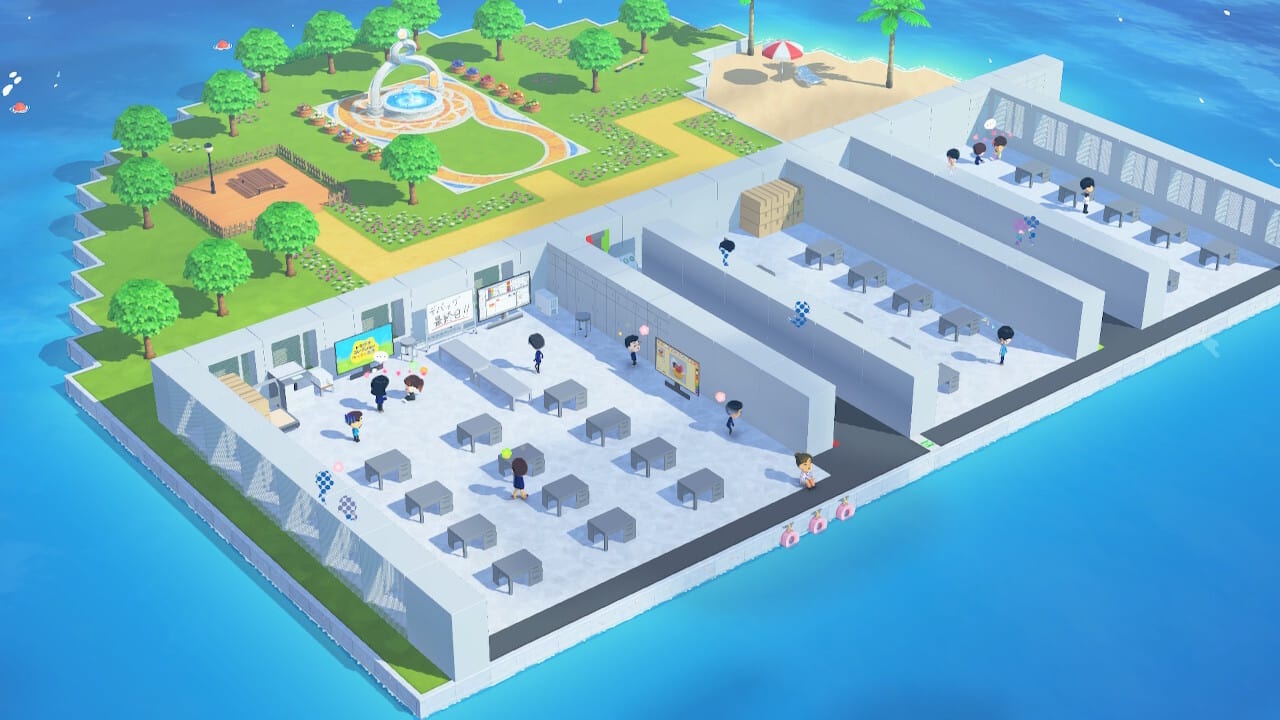
Image created during development.
This place certainly looks familiar. Even so, it's impressive to see what you can create with this much freedom – it’s beyond the scope of an island.
Takahashi:
A lot of effort has been put into this, though. Actually, each desk is a Mii character’s home. Everyone's talking or lounging around instead of going to their desks. (Laughs) The things you've told your Mii characters will come out at times like this.
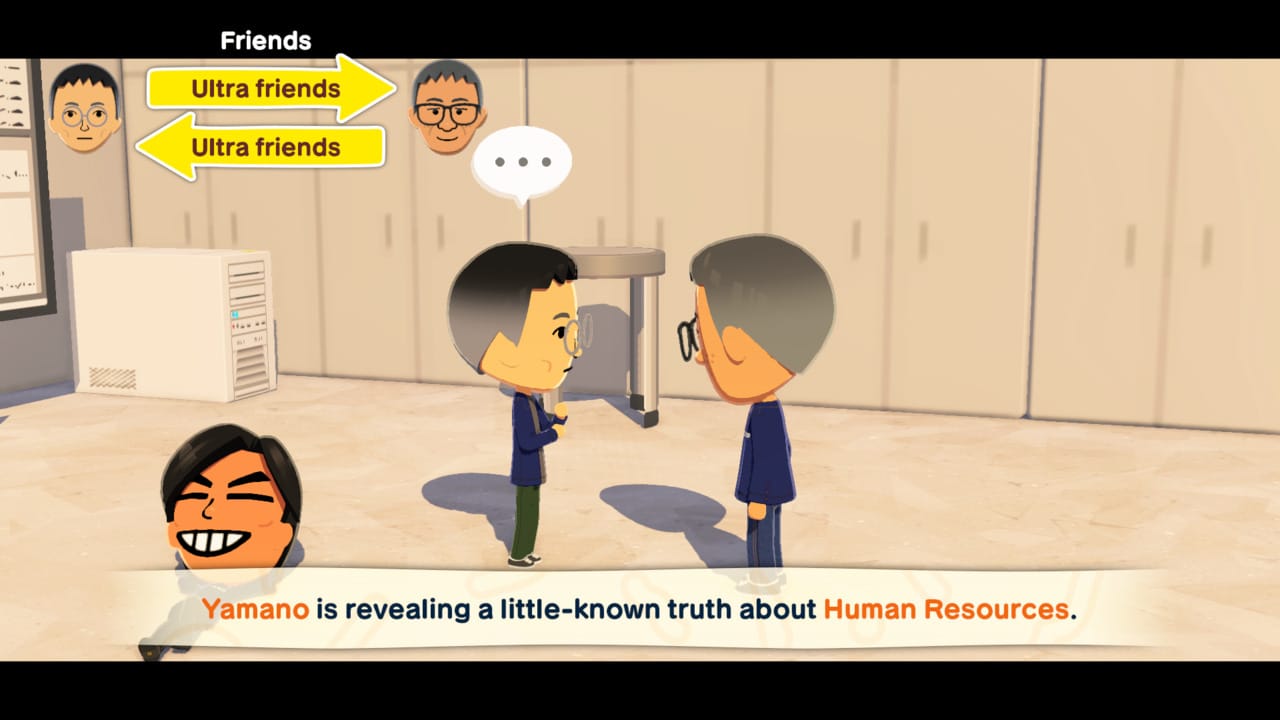
Image created during development.
This... makes you wonder what they're talking about... (Laughs)
Ueno:
Because you can create all sorts of things with UGC, we even made a "Ryutaro Takahashi staff security card." We also made "payslip" items to use as gifts. In addition to creating UGC from scratch, you can also type in words or simply paste the faces of Mii characters that live on the island as designs, so even players who aren't as good at drawing can have fun with it.
Kageyama:
Kageyama: Oh, and there are pets on this island as well.
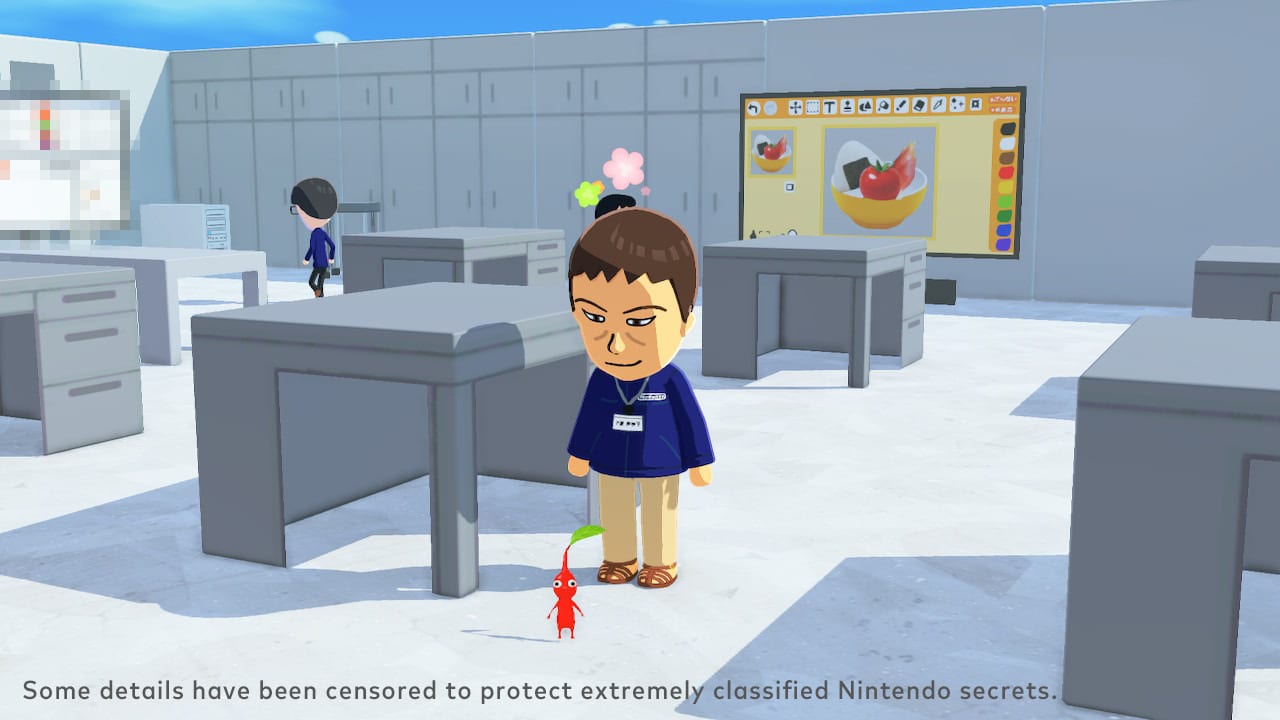
Image created during development.
Is that a Pikmin?
Takahashi:
That's another example of UGC. You can create your own pets and give them to your Mii characters. We created Pikmin as pets since they're familiar to us, and our Mii characters were taking them for walks. (Laughs) We made all sorts of items inspired by inside jokes that only the development team would get.
Ueno:
We thought that if we developers got a laugh out of it, players will have just as much fun coming up with their own inside jokes.
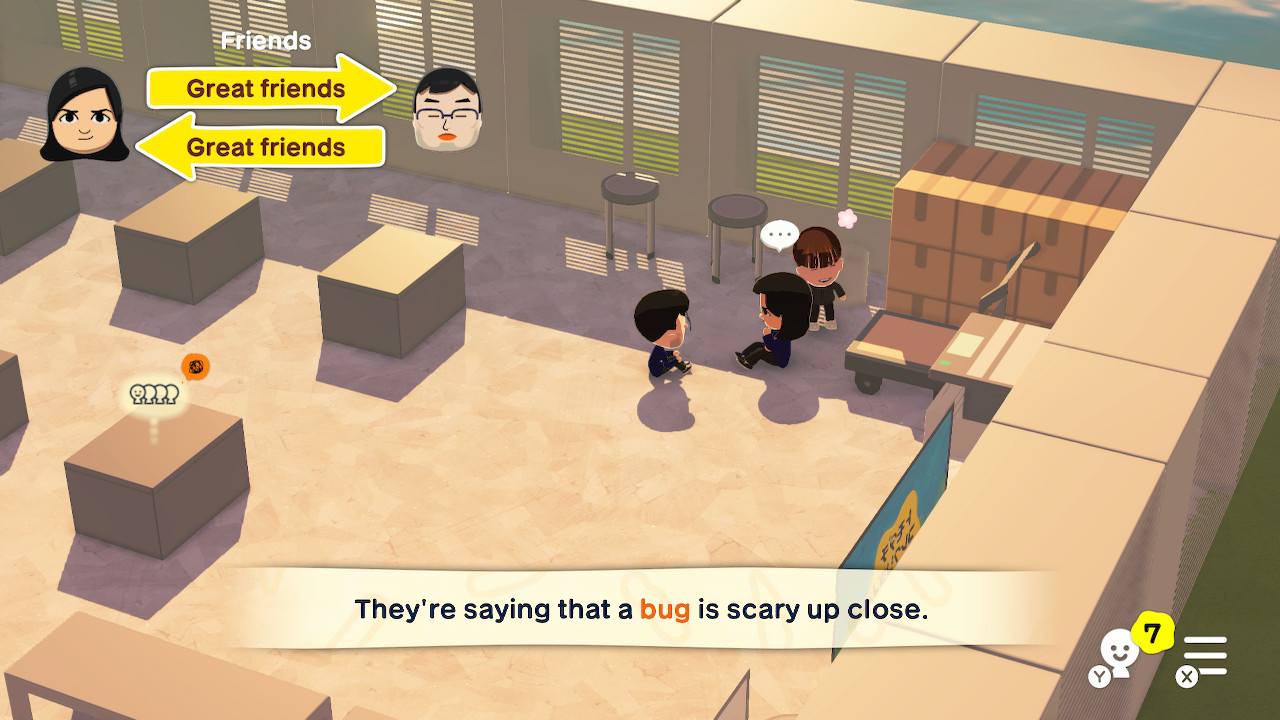
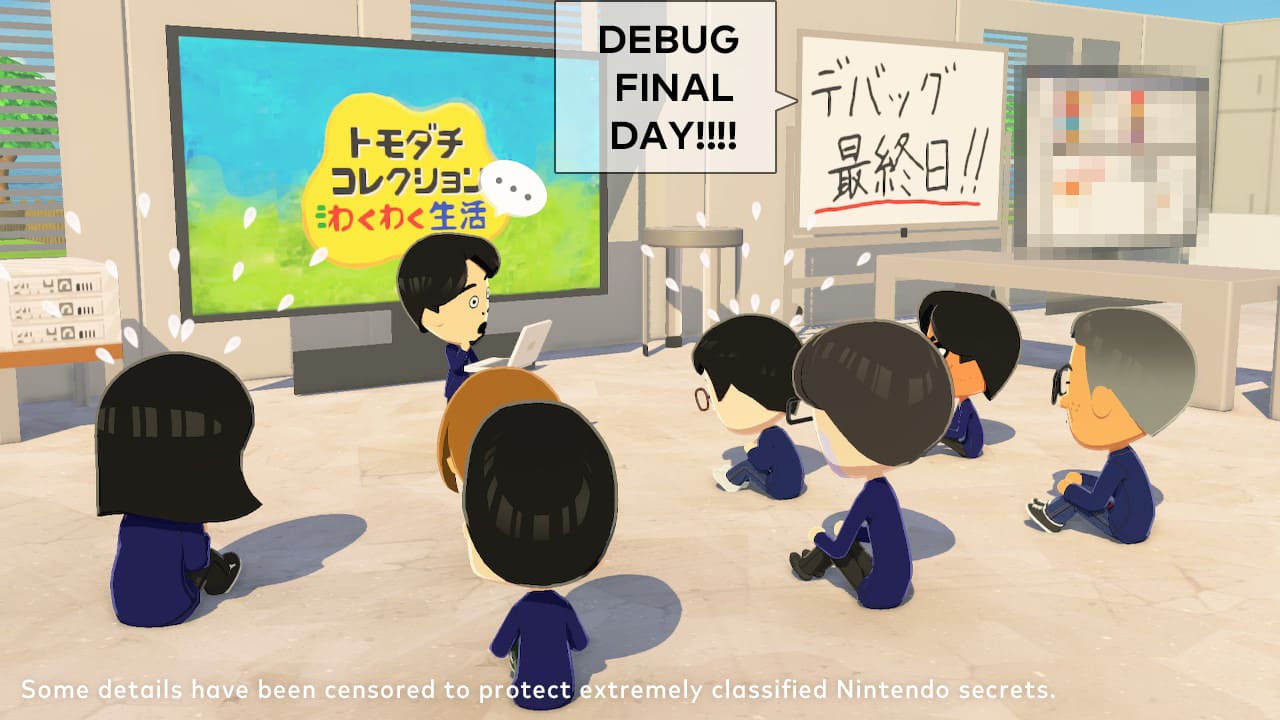
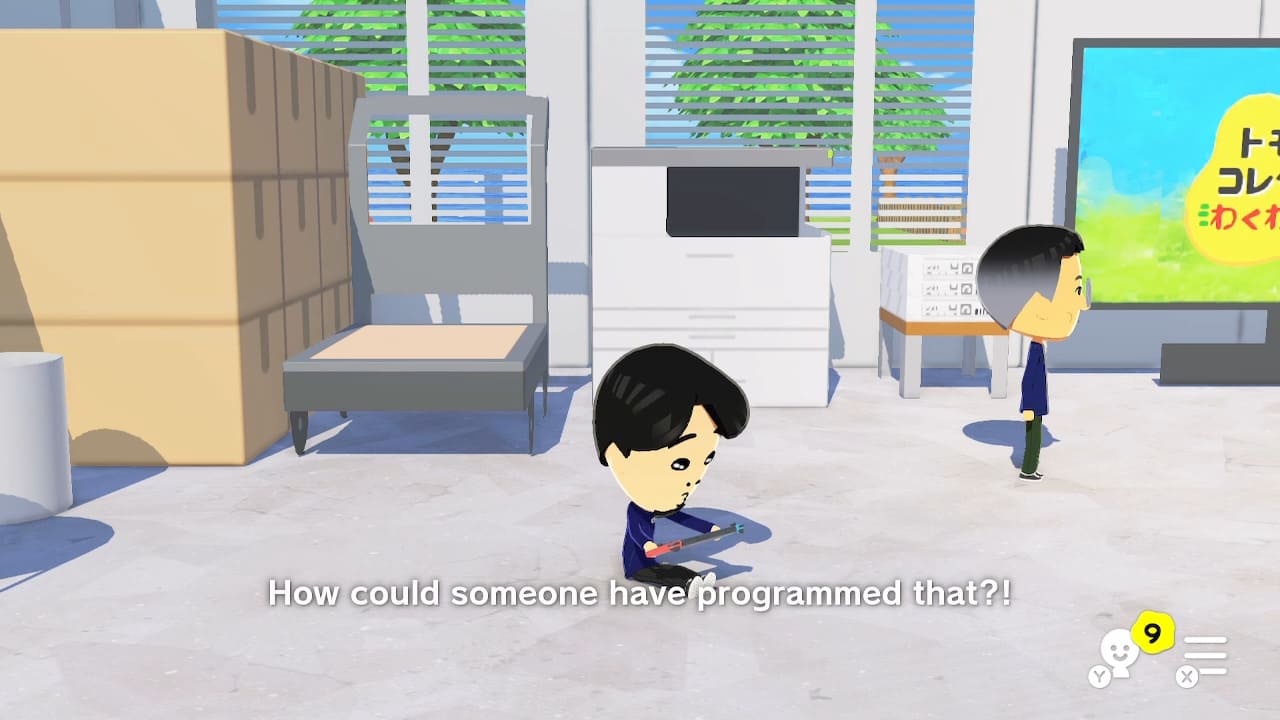
Images created during development.
So players can create familiar places, items, and people in the game to see how their Mii characters interact in those settings, and that mix often leads to new inside jokes. Designing the game in such a way that all those freely created elements wouldn’t break it must have been a challenge?
Ueno:
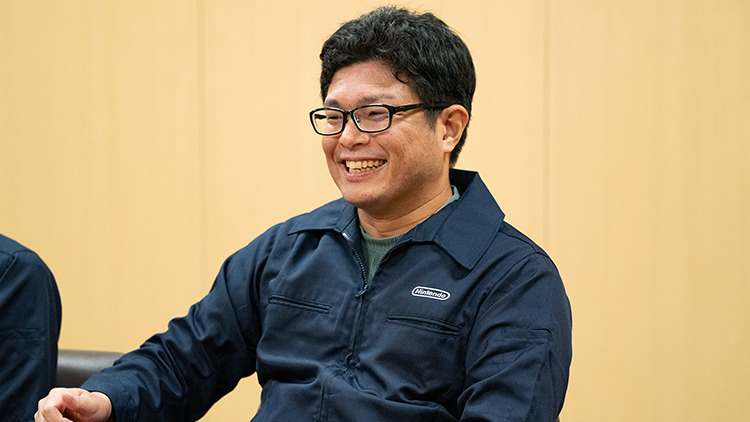
It was no easy feat for the programmers. Mii characters would sometimes pace up and down the same area, or several of them would try to use the same item at once... So we set rules for each of those unintended behaviours, keeping the ones we thought were odd but amusing. After layering all those elements so they wouldn’t fall apart no matter how they were combined, everything finally clicked into place and made sense. Before we had those rules in place, it was pure chaos and really hard to manage. There was even a time when we thought leaving it chaotic like that might actually be kind of fun. (Laughs)
Kageyama:
Back when it was pure chaos, we kept experimenting, without finding the right solution, and asking ourselves what players would actually enjoy seeing.
Takahashi:
It feels like we spent the entire project fine-tuning that balance. (Laughs) It took a long time until the final vision was clear, and we could say, “Now we just have to build the thing!” We originally planned to finish the UGC tools in about a year and a half. But because we wanted players to enjoy the game simply by observing the Mii characters, we came up with more and more ideas as development progressed.
Ohnishi:
Takahashi-san and the UGC planner kept coming up with ideas like, “We want this feature... oh, and this one too”.
Takahashi:
We ended up spending six or seven years on it. (Laughs)
Six or seven years?! That’s quite surprising. You must have gone through a lot of trial and error to put it all together and get the balance right. People play the Tomodachi Life series in so many different ways. Did you have that in mind during playtesting?
Takahashi:
Once things had finally come together after all that trial and error, we conducted playtests, primarily with the families of our development team. Because Tomodachi Life is designed to be played over time, we asked the playtesters to spend about a week creating Mii characters and experimenting with different UGC. The feedback was overwhelmingly positive, which was a big relief.
Kageyama:
Since we'd struggled with it for so long, it was really reassuring to hear that people had found it fun.
When you were conducting playtests, did some things go exactly as you expected, and others not?
Takahashi:
I personally really wanted people to have a go at creating UGC. I was worried that if they couldn't create exactly what they had in mind, it wouldn't be fun for them. But in the end, they were just as eager as we'd hoped to dive in and make lots of things.
Minegishi:
We were caught by surprise when my child reported a lack of interest in the romance elements.
Ueno:
And we'd worked so hard on those elements, too! (Laughs)
Minegishi:
My child still had fun making Mii characters and exploring friendships. But the romance elements didn't capture their imagination, which is something we hadn't accounted for, and that was really interesting to see.
Ohnishi:
My child, on the other hand, was completely invested in my Mii character's love life. (Laughs)
Everyone:
(Laughs)
Takahashi:
Everyone who took part in the playtest had a different approach to the game, and it was very rewarding to see each person discover their own way of enjoying Tomodachi Life. There are countless ways to play Tomodachi Life, and ever since the first game, we’ve wanted it to be something you can play casually, in a relaxed way. So we wanted to ensure that, while you can create what you want in this game through UGC, you can have just as much fun even if you don’t create anything at all. There are ready-made templates for UGC that you can use if you like, but you can also choose not to create anything at all. Even island-building can be left entirely to the Mii characters. We wanted to ensure that anyone seeking a relaxed experience can play this game in the most carefree way. Seeing players embrace all those different ways to play was one of the biggest takeaways we got from the playtests and was a huge encouragement for us.